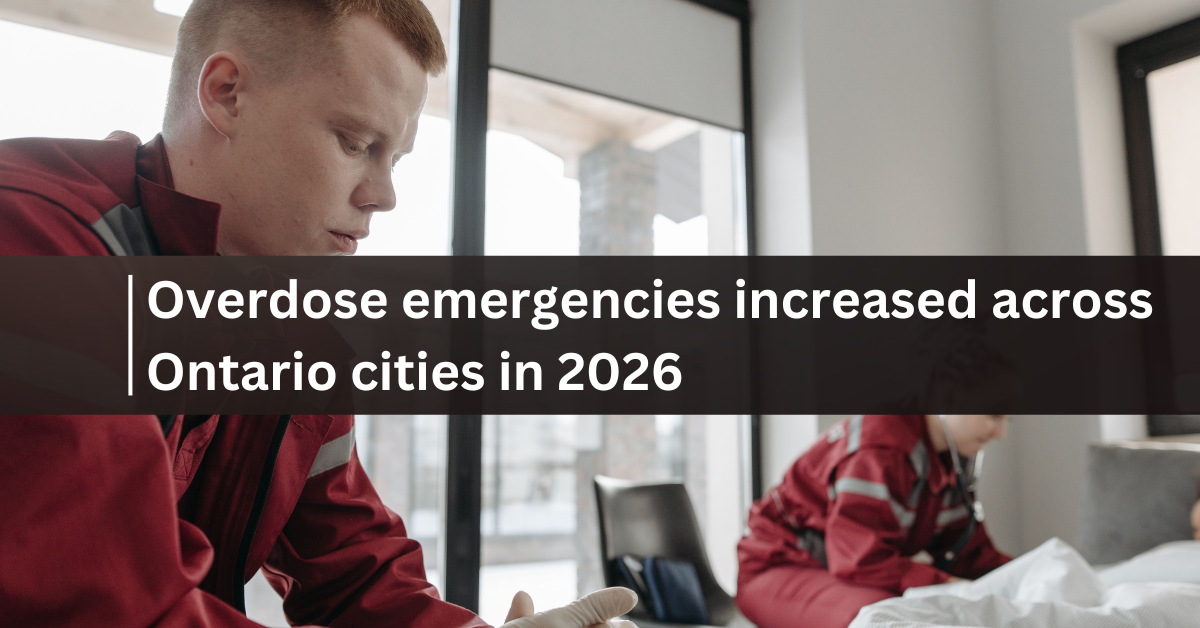
According to the results of a recent analysis published by CBC News and authored by Ariel Tozman, the number of opioid overdose calls to paramedics recorded in the first five months of 2026 increased in four Ontario cities significantly compared to one year ago.
Specifically, the number of calls to emergency services for suspected opioid poisonings increased by 20% in Thunder Bay and 199% in Hamilton over the period spanning from January to May compared to the same period in 2025. In addition, non-fatal opioid overdose calls increased by nearly 115% in Toronto, while Ottawa Paramedic Services recorded a 52% increase in overdose calls, including incidents not related to opioids.
“While the data doesn’t show what’s behind the increases, researchers, health-care workers and advocates suggest the toxic drug supply and the closure of supervised consumption sites (SCS) in the past two years may be factors”, reads the article.
According to Gillian Kolla, a harm reduction researcher and assistant professor at Memorial University of Newfoundland, Ontario is experiencing a drug toxicity crisis, as newer and more poisonous substances, such as medetomidine, a veterinary tranquilizer, enter the illicit drug supply. She noted that the Ontario government, which has forced the closure of provincially funded supervised consumption sites, has been investing in abstinence-based treatment hubs instead.
Ontario previously operated 17 supervised consumption sites, but legislation passed in 2024 led to the closure of 10 sites near schools or daycares by March 2025 and prohibited new sites from opening. In March 2026, the province ended funding for the remaining publicly funded sites, leaving only three privately funded overdose prevention sites in operation. Most former sites have since transitioned into Homelessness and Addiction Recovery Treatment (HART) Hubs, which emphasize abstinence-based treatment and recovery rather than supervised drug consumption.
Following the 2025 supervised consumption site closures, Ontario experienced a 69.5% increase in EMS responses and a 67% rise in emergency department visits for opioid-related overdoses, according to an open letter to Premier Doug Ford and Health Minister Sylvia Jones from the Canadian Drug Policy Coalition.
In his interview with CBC News, Bill Sinclair, CEO of the Neighbourhood Group Community Services in Toronto, said part of the reason people are making more 911 calls is that individuals “are making smart decisions of using publicly,” to avoid the risk of deadly overdose. “Everywhere I go, people are telling me that people are using on the sidewalk, in the TTC, in the libraries, places where they will be seen and saved,” he said.