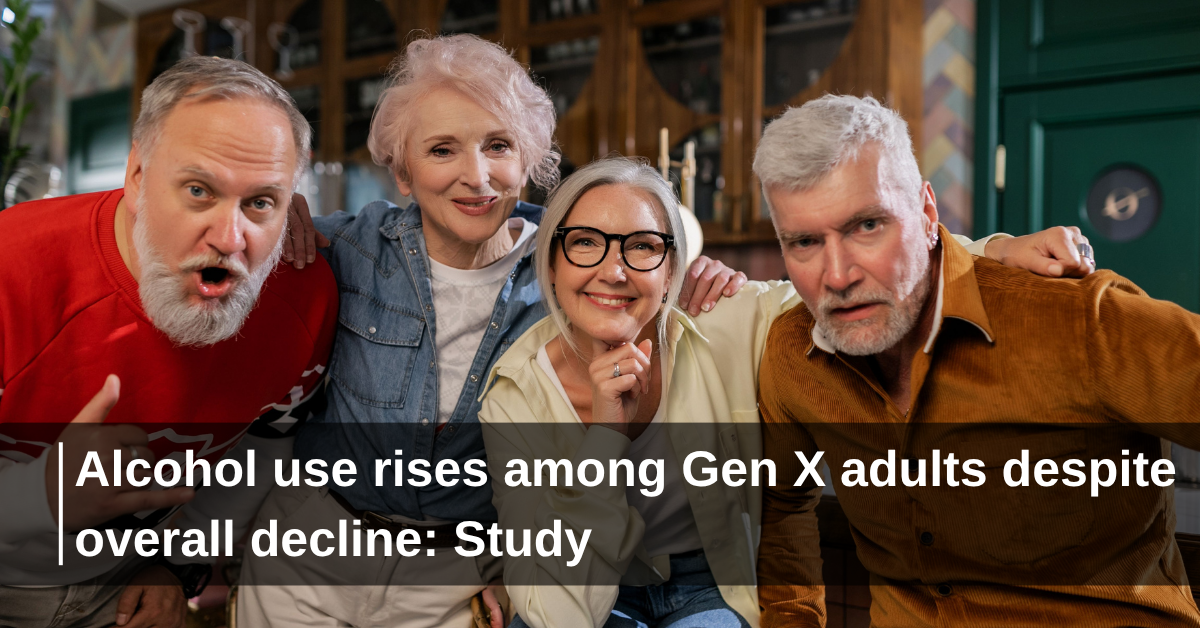
According to the results of a recent study, adults within the Generation X age group are consuming more alcohol compared to other age groups. The research study, published in the journal Annals of Internal Medicine, examined survey data collected from 114,000 U.S. adults collected by the Centers for Disease Control (CDC) between 2018 and 2024. It was found that in the U.S., alcohol consumption declined overall from 2022 to 2024, with 2% fewer adults reporting drinking alcohol, and 8% fewer reporting drinking heavily; however, it was still higher compared to 2018 levels. What’s more, it was found that the decrease was mostly due to Gen Z and Millennials consuming less alcohol.
“Younger adults account for most of [the decline], and adults 50-64 are the one age group still going up,” said Brian Lee, the study’s co-author and hepatologist and liver transplant specialist with Keck Medicine of USC, in his interview with Prevention. “In 2018, the age groups were fairly close on heavy drinking. By 2024, adults 50-64 had pulled significantly ahead of all other age groups.”
In addition, the study’s results showed that heavy alcohol consumption among women increased more compared to that of men during the pandemic, and currently remains approximately 13% higher compared to pre-pandemic levels. “The share of women who drink heavily is now slightly higher than the share of men, which is a fairly recent development,” Dr. Lee said.
Dr. Lee suggested that increased drinking during the pandemic may have become a lasting habit among adults in their 50s, reinforced by generational norms around regular alcohol consumption. Both Lee and Christopher Kahler, director of the Center for Alcohol and Addiction Studies at the Brown University School of Public Health, noted that advertising and public messaging may act as a possible influence, including limited attention to older adults and earlier claims that moderate drinking benefited heart health. Kahler also pointed out that fewer parenting responsibilities, greater disposable income and marketing that presents alcohol as a luxury may contribute to drinking in this age group.
“The same amount of alcohol does more damage to a 55-year-old liver than a 25-year-old one,” said Dr. Lee. “Beyond the liver, alcohol raises blood pressure, disrupts sleep, worsens acid reflux, increases the risk of falls and fractures, and interacts with medications that many people over 50 take, including blood thinners, sleep aids, and some blood pressure and diabetes medications. For women, breast cancer risk rises with alcohol even at fairly low levels of intake.”