25 Years On. Still Needed: How Drug Testing Can Be Part of the Solution
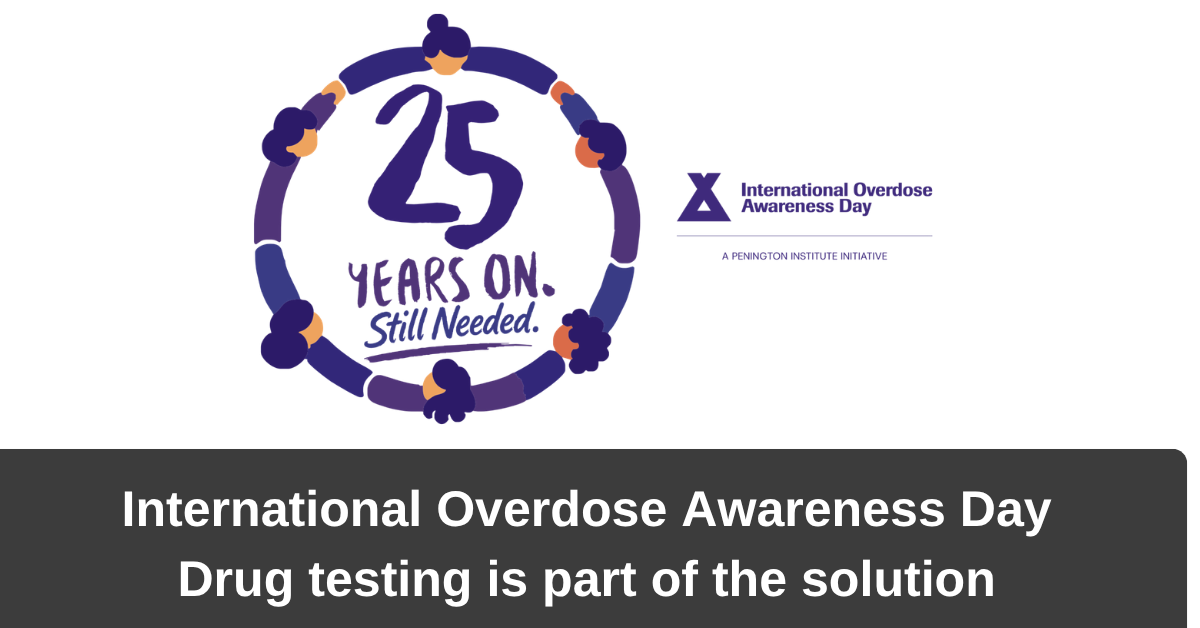
August 31 marks International Overdose Awareness Day, a day to remember the people we have lost to overdose, acknowledge the families and communities affected by substance use, and renew our commitment to preventing future deaths. This year’s theme, “25 Years On. Still Needed,” is a powerful reminder that after 25 years of raising awareness, there is still much work to do.
Overdose doesn’t discriminate. It can affect people from every community, every profession, and every walk of life. And while the conversation around substance use has changed significantly over the past 25 years, one thing remains essential: people need opportunities to connect with help before a substance-use problem becomes a crisis. Drug and alcohol testing can be one part of that conversation. When people hear “drug testing,” they may immediately think about workplace policies, compliance, consequences, or disciplinary action. But testing can serve another important purpose: creating an opportunity for intervention.
A drug test doesn’t diagnose a substance use disorder. It doesn’t tell us everything about a person’s relationship with a substance. What it can do is provide objective information that may open the door to a conversation that otherwise might never happen – and that conversation can be life-changing.
The workplace is community
For many people struggling with substance use, work is one of the places where they maintain stability, relationships, routine, and a sense of purpose. The U.S. National Institute for Occupational Safety and Health (NIOSH) recommends workplace-supported recovery programs that help prevent substance-use disorders, reduce stigma, encourage treatment, and support workers in recovery. NIOSH notes that many people experiencing substance-use disorders are employed, making the workplace an important setting for reaching people with support.
A well-designed workplace drug and alcohol program should therefore be more than a testing policy; it should be connected to education, Employee Assistance Programs (EAPs), treatment resources, return-to-work processes, and recovery support.
A test can identify a potential concern, but what happens next is what matters, employers must think about:
- Do employees know where they can get help?
- Are supervisors trained to recognize concerns and respond appropriately?
- Is there an Employee Assistance Program or other confidential referral pathway?
- Are policies designed to support recovery where appropriate?
- Are employees returning from treatment given the structure and support they need?
Testing can mean accountability in recovery
Drug testing can also have a role in treatment and recovery programs and is used in some treatment settings alongside counselling and other services to monitor progress and provide accountability.
One evidence-based approach is contingency management, which uses positive reinforcement for specific recovery-related behaviours, including submitting drug-negative samples. Research has consistently demonstrated benefits from contingency management, a 2021 meta-analysis of 23 randomized trials found that contingency management was associated with a greater likelihood of long-term abstinence from illicit substances compared with comparison treatments. The studies used objective measures, including urine toxicology, to assess drug use. At long-term follow-up, participants receiving contingency management were 22% more likely to be abstinent than those in comparison conditions..1
The important distinction is that the test itself isn’t the treatment, it is simply a tool within the treatment plan. For someone working toward recovery, knowing that drug use will be objectively assessed can provide structure and accountability. A negative result can also provide tangible evidence of progress. And when a test indicates renewed substance use, that information can provide an opportunity to intervene early rather than waiting until the person experiences a more serious consequence.
This International Overdose Awareness Day, DATAC encourages employers, testing professionals, collectors, supervisors, and everyone working in the drug and alcohol testing industry to consider not only what a test can tell us, but what we can do with that information to help people.
Because behind every test result is a person—and every person deserves the opportunity to find their way toward help and recovery.
References
- Ginley MK, Pfund RA, Rash CJ, Zajac K. Long-term efficacy of contingency management treatment based on objective indicators of abstinence from illicit substance use up to 1 year following treatment: A meta-analysis. J Consult Clin Psychol. 2021 Jan;89(1):58-71. doi: 10.1037/ccp0000552. PMID: 33507776; PMCID: PMC8034391.