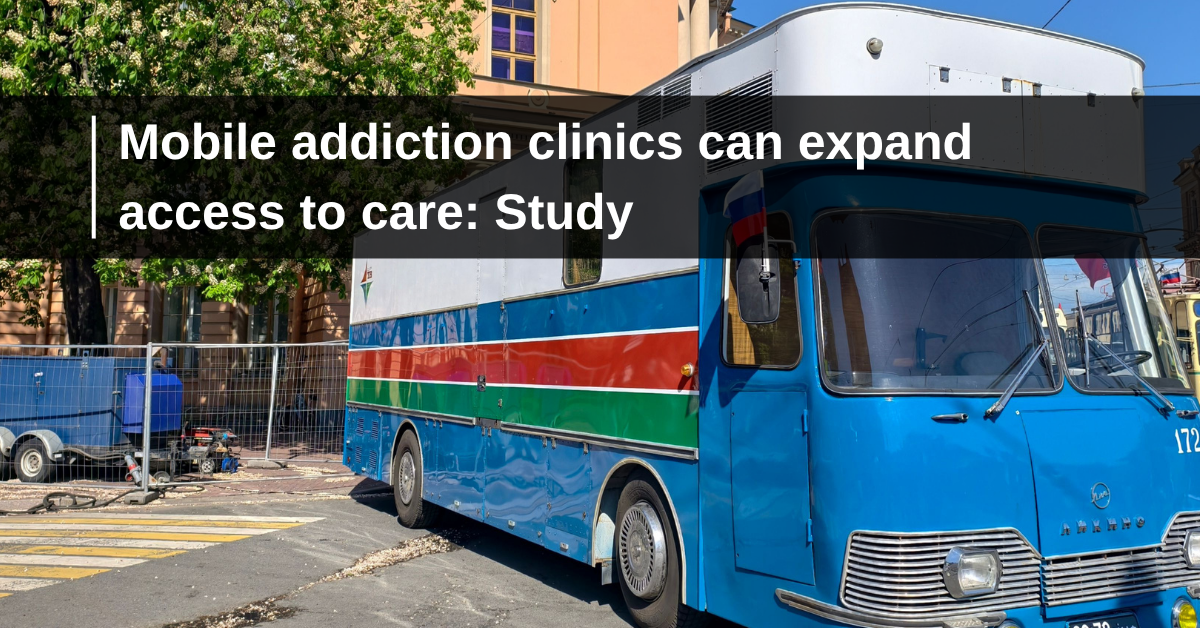
According to the results of a new research study, mobile addiction services can be implemented across multiple organizations and communities to provide addiction treatment, harm reduction services and basic healthcare directly to individuals who use drugs, especially those who may have trouble accessing “traditional” care. The study, which was authored by researchers at Mass General Brigham, was published in the International Journal of Environmental Research and Public Health.
“Our model proved highly adaptable across different regions, and the successful deployment of new mobile teams demonstrated that street-based mobile addiction services can be effectively operated by differing entities, ranging from academic medical systems to community health centers,” said the study’s senior author Elsie M. Taveras, Chief Community Health and Health Equity Officer at Mass General Brigham and Executive Director of the Kraft Center for Community Health in a press release.
Launched as a single Boston clinic in 2018, the Kraft Center’s Community Care in Reach program uses mobile units to deliver healthcare to people at high risk of drug-related illness and death, particularly those experiencing or at risk of homelessness. The initiative has since expanded to six programs across Massachusetts with support from the Massachusetts Department of Public Health and the Kraft Center.
Between January 2022 and June 2024, the programs recorded 17,887 harm reduction encounters and 16,117 clinical encounters involving 4,645 individuals. Buprenorphine treatment was initiated in 1,227 people, with 15% remaining in treatment after 180 days, while all participating programs successfully reached populations that are often difficult to engage in traditional healthcare settings.
“Our findings reveal that the model can be expanded to reach and serve adults with very complex needs, and that the physical presence of mobile units can offer a popular, low-barrier access point for care,” said Cynthia A. Tschampl, Senior Research Scientist at The Schneider Institutes for Health Policy and Research, Heller School for Social Policy and Management at Brandeis University in a press release.