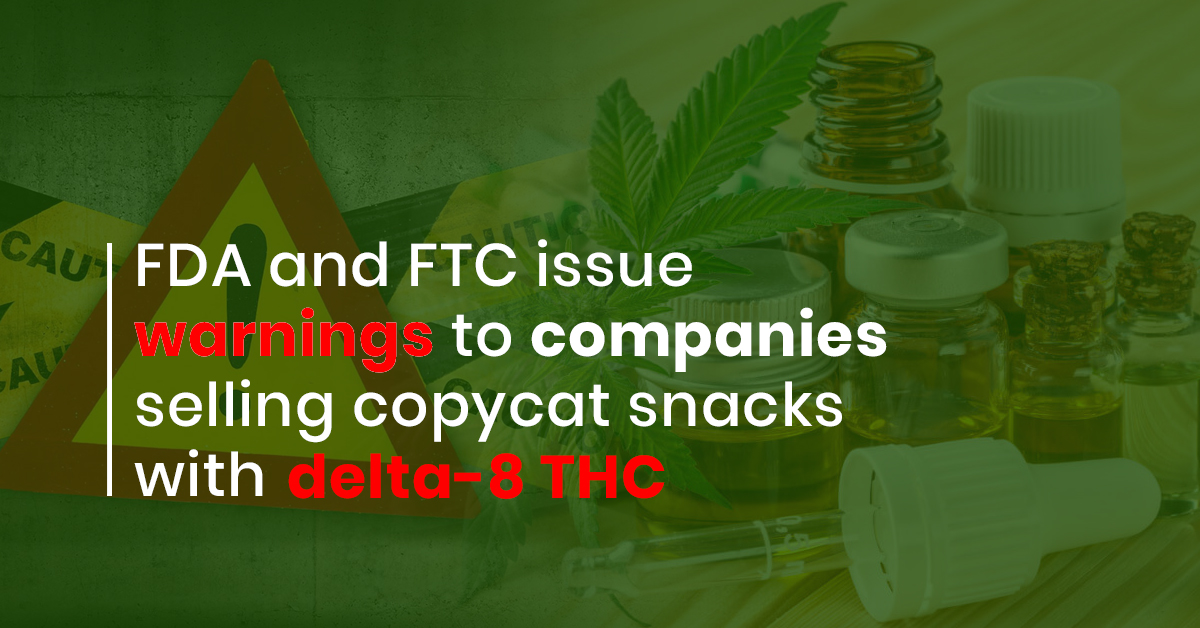
Earlier this year, in July, the US Food and Drug Administration (FDA) and the Federal Trade Commission (FTC) issued warnings to five companies Tuesday as part of a joint effort to curb illegal sales of copycat food products containing delta-8 THC. Specifically, the cease-and-desist letters were sent to the companies in violation of the Federal Food, Drug, and Cosmetic Act (FD&C Act). The warning letters were issued to: Hippy Mood, Earthly Hemps, Shamrockshrooms.com, Mary Janes Bakery Co. LLC and Life Leaf Medical CBD Center. Moreover, the FDA also issued a warning letter to the company GrowGod LLC for the same FD&C Act violations.
Delta-8 THC is the psychoactive compound naturally occurring in the cannabis sativa plant. According to a news release, the warnings were issued due to concerns regarding the products being mistaken for traditional foods, resulting in accidental ingestion or overconsumption.
“Inadequate or confusing labeling can result in children or unsuspecting adults consuming products with strong resemblance to popular snacks and candies that contain delta-8 THC without realizing it,” said FDA Principal Deputy Commissioner, Dr. Namandjé Bumpus, in a news release. “As accidental ingestion and/or overconsumption of delta-8 THC containing products could pose considerable health risks, the companies who sell these illegal products are demonstrating complete neglect for consumer safety. The FDA will continue to work to safeguard the health and safety of U.S. consumers by monitoring the marketplace and taking action when companies sell products that present a threat to public health.”
In 2022, the FDA had already issued warnings to consumers regarding children accidentally ingesting food products containing THC. According to the statement released by the FDA, over the period of Jan. 1, 2021, to Dec. 31, 2023, the agency received over 300 reports of adverse events involving children and adults who consumed delta-8 THC products. Moreover, approximately half of these reports involved hospitalization or emergency department visits, while nearly two-thirds of the adverse events followed ingestion of delta-8 THC-containing food products such as candy or brownies. In addition, the recorded adverse events included, but were not limited to, hallucinations, vomiting, tremour, anxiety, dizziness, confusion, and loss of consciousness.
“Companies that market and sell edible THC products that are easily mistaken for snacks and candy are not only acting illegally, but they are also putting the health of young children at risk,” said Samuel Levine, director of the FTC’s Bureau of Consumer Protection. “Those that prioritize profits in front of children’s safety are at serious risk of legal action.”
FDA also raised concerns regarding the packaging of delta-8 THC-containing products which is nearly indistinguishable from many popular snacks. “Several of the companies warned today illegally sell copycat food products containing delta-8 THC, including chips, cookies, gummies or other snacks that mimic well-known snack food brands by using similar brand names, logos, or pictures on packaging that consumers, especially children, may confuse with traditional foods,” reads the statement.