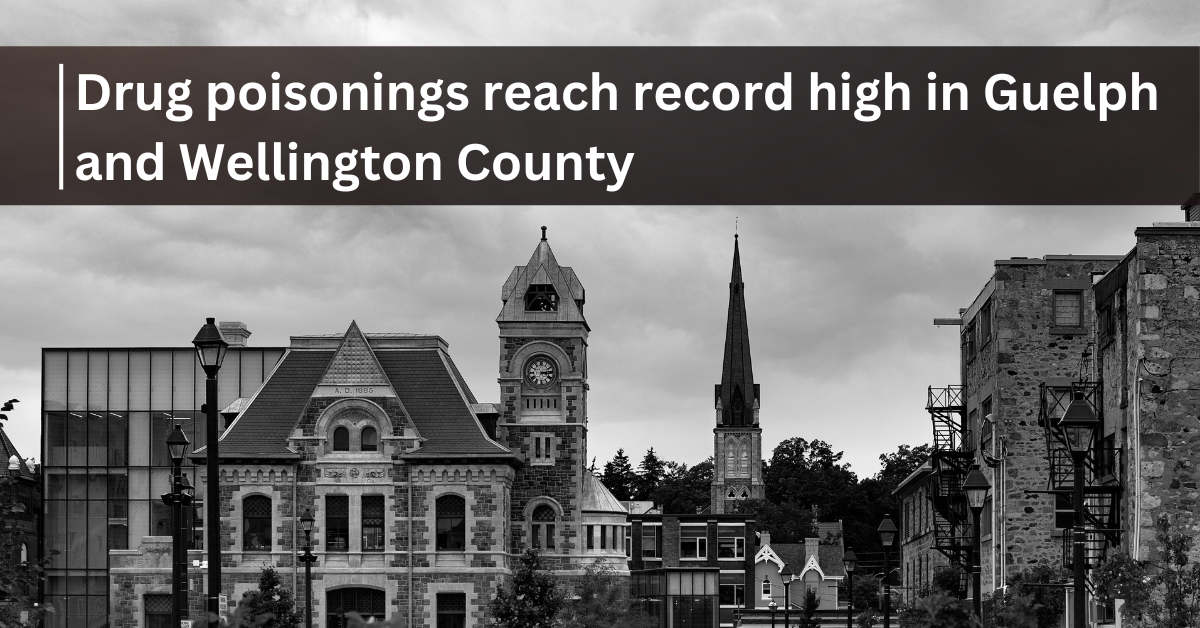
According to new data released by Wellington-Dufferin-Guelph Public Health (WDGPH), there has been a record number of drug poisoning incidents in Guelph and Wellington County since local surveillance began. Specifically, at least 269 incidents were reported in the first half of 2026, which corresponds to more than double the number of poisonings recovered over the same period in 2025. Moreover, approximately 92% of poisonings occurred in the City of Guelph, and most deaths were recorded in Wellington County.
According to the Wellington Guelph Drug Strategy, the rise in drug poisonings has been driven by an increasingly toxic and unpredictable drug supply, with substances such as medetomidine, a veterinary sedative, appearing more frequently in illicit drugs.
Furthermore, the neighbouring Waterloo Region, the Overdose Monitoring Alert and Response System recorded 38 suspected overdoses and two suspected drug-related deaths between May 27 and May 31.
Drug-checking services at Sanguen Health Centre detected fentanyl contaminated with medetomidine, carfentanil, and nitazenes, as well as fentanyl mixed with nefopam, a non-opioid pain medication not approved in Canada. In addition, methamphetamine samples were also found to contain xylazine, a sedative that can cause prolonged periods of unresponsiveness. Health officials warn that these dangerous drug mixtures can cause complicated overdose events, with some cases requiring repeated administration of naloxone.
Wellington Guelph Drug Strategy has recommended for individuals who use drugs to “start low and go slow,” avoid mixing substances, and also test their supply where drug checking services are available. Moreover, it is recommended that people who use substances avoid using them alone and to call the National Overdose Response Service for phone monitoring and support.
“The unregulated drug supply remains increasingly toxic and unpredictable, with the presence of sedatives such as medetomidine that can contribute to prolonged sedation, unresponsiveness and other serious health risks,” said WDGPH officials in a released statement. “The impacts of the drug toxicity crisis continue to have a significant impact on the community.”