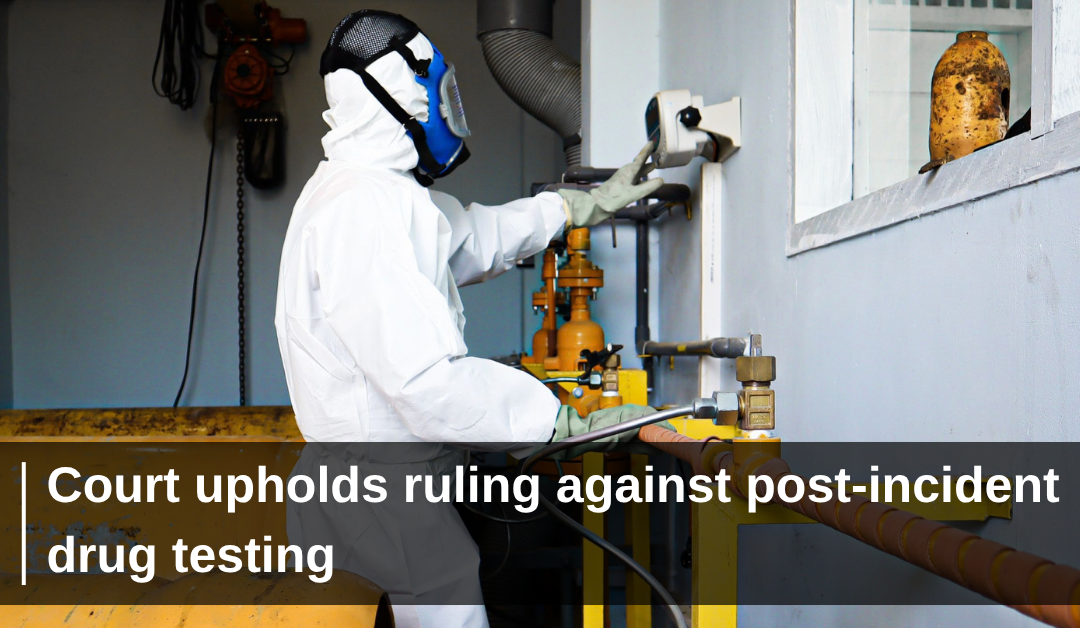
According to the new rule published in the U.S. Federal Register earlier in May, the U.S. Department of Transportation (DOT) will require “directly observed” urine drug-testing in federal workplace situations where saliva testing is required, but is not possible. The rule will take effect on June 10.
Although lab-based oral fluid testing was approved by the Substance Abuse and Mental Health Services Administration (SAMHSA ) in 2019 and authorized by the DOT as an alternative to urine testing in 2023, its implementation has stalled because no FDA-approved laboratories are currently certified to process the tests.
Oral fluid testing is favoured by many employers because it is better at detecting recent drug use than urine testing. The push for its adoption has been led the American Trucking Association (ATA) has been leading the campaign to implement oral fluid testing, while the regulations also apply to workers in aviation, rail, public transit, and pipeline sectors. Its supporters have argued that it could reduce issues associated with urine testing, including specimen tampering and challenges faced by individuals with paruresis (“shy bladder” syndrome).
“Every month that passes without certified oral fluid testing is another month when federal workers with paruresis face anxiety, discrimination, and career barriers,” Dr. Steven Soifer, co-founder of the International Paruresis Association, said in a statement in March. “We’ve been working on this issue since our founding [30 years ago]. Our members ask the same question every day: When will the federal government complete the work it already approved?”
In April 2026, six members of Congress urged the U.S. Department of Health and Human Services (HHS) Secretary Robert F. Kennedy Jr. to address FDA regulatory barriers that have prevented U.S. laboratories from becoming certified for oral fluid drug testing. They cited data from Quest Diagnostics showing a sharp increase in substituted urine samples and argued that oral fluid testing could help reduce tampering. The FDA has indicated it may revise toxicology testing requirements, and HHS’s approach to oral fluid testing may also influence the future development of federal guidelines for hair strand testing.