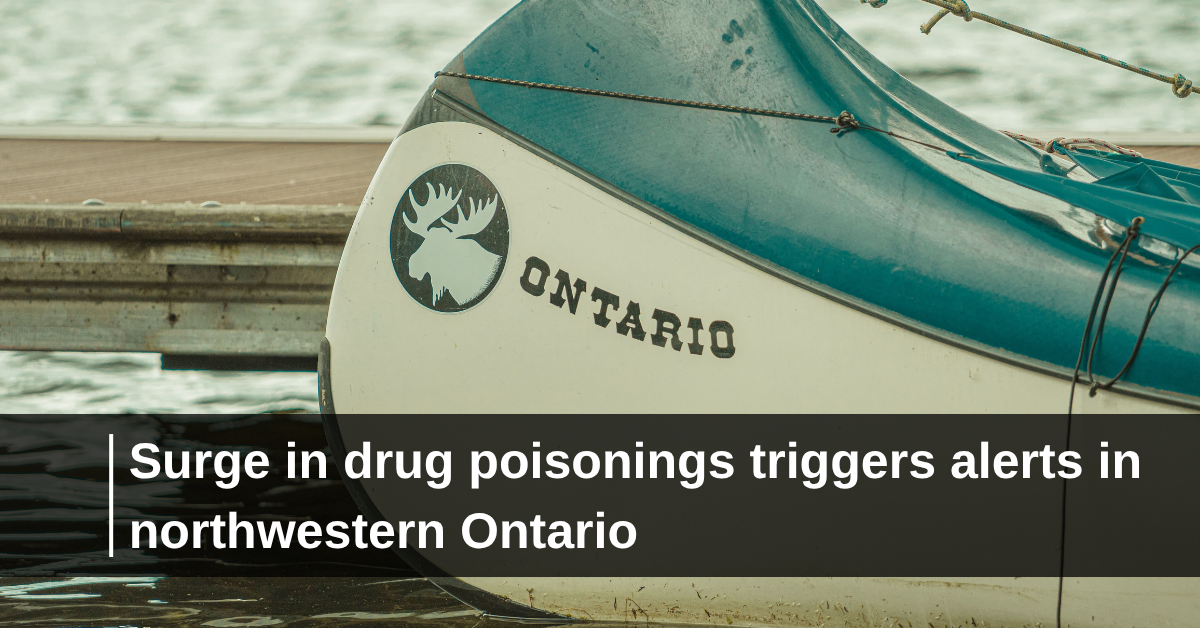
In September, health authorities in northwestern Ontario have issued multiple drug warnings after over 60 suspected drug poisonings were recorded in the Kenora area within two days, alongside the detection of a substance not previously identified in the region’s unregulated drug supply.
According to the Northwestern Health Unit, several cases required repeated doses of naloxone and medical treatment, and the effects could not always be reversed. While fentanyl was initially suspected, testing of some drug samples revealed the presence of nitazene opioids. Officials said the substance is being sold on the illicit market under the name “down” and has been found in several colours, including orange, purple, blue and white.
Health Canada confirmed that a drug sample collected in the region in May contained clodesnitazene, a synthetic opioid belonging to the nitazene class whose potency and effects are not yet well understood. Testing also identified several other substances in the sample, including the benzodiazepine ethylbromazolam, as well as carfentanil, medetomidine, caffeine and dimethylsulphone.
The health unit described clodesnitazene as a “new” nitazene opioid. The substance had previously been identified by Toronto’s Drug Checking Service in April, while the northwestern Ontario sample was collected on May 15, 2026. “This result may imply we could be seeing substances found in larger centres, like Toronto, in our region, much quicker than previously thought,” the public health authority said in a news release.
In addition, the health unit warned that the combination of substances increases the risk of poisoning and death, particularly because the sedative effects of medetomidine can persist after naloxone is administered and may require additional airway support. Between May 1 and August 25, 2026, a total of 17 suspected drug-related deaths were reported in the region, including eight in May, while an OxyContin pill tested by NorWest Community Health Centres was found to contain etonitazene, a potent synthetic nitazene opioid considered about 50 times stronger than fentanyl. A separate alert issued on September 15 warned of an increased poisoning risk in Red Lake involving substances being sold as cocaine and hydromorphone.
“What is happening in Kenora should concern every community in Ontario and our decision making governments must step up,” Sudbury’s Go-Give Project said in a social media post. The GoGive is a nonprofit charitable organization based in Greater Sudbury, Ontario, founded in 2020. Its main focus is supporting people experiencing substance use disorders and related challenges, particularly through harm-reduction and street-level outreach.
“This is why language matters,” the post said. “These are drug poisonings. People often do not know what is in the substance they are consuming or how potent it may be. Most importantly, remember that behind every statistic is a person, a family, a frontline worker and a community trying desperately to keep people alive. We cannot help someone recover if they do not survive.”