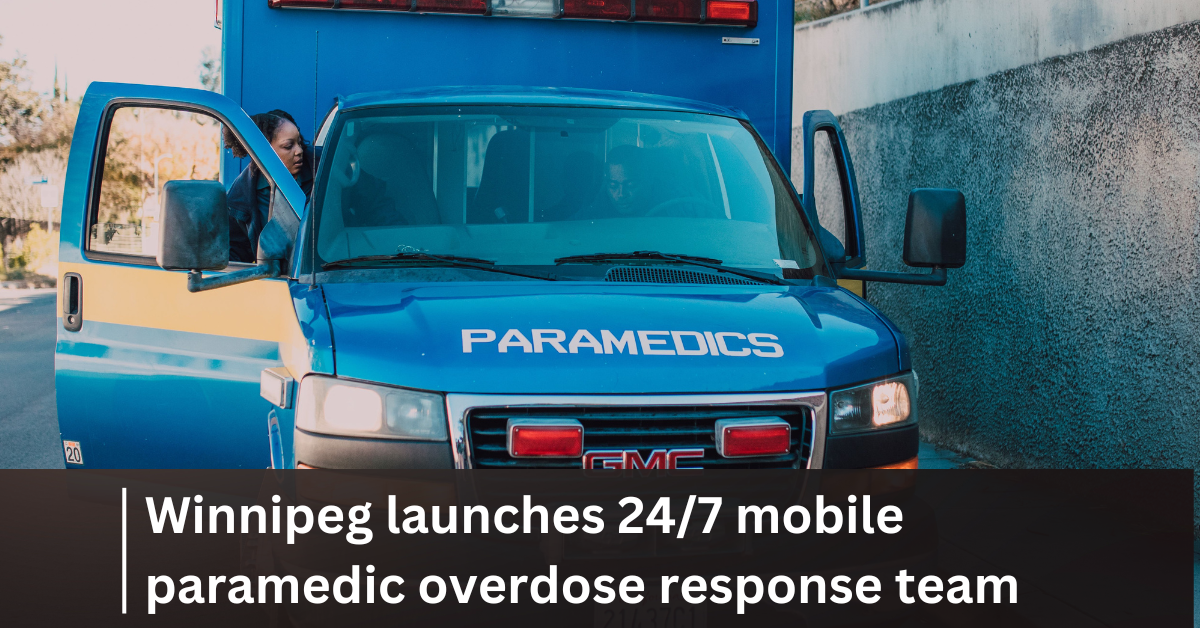
Earlier in June, the Manitoba government announced a new pilot project that will deploy 24/7 a mobile paramedic team in downtown Winnipeg to respond to overdose calls and address the ongoing toxic drug crisis. However, the city’s mayor and the paramedics’ union have raised concerns about staffing the initiative amid existing workforce shortages.
“In the past week alone, several ambulances were out of service on multiple days because we lacked the staff to operate them,” Mayor Scott Gillingham said in a statement following the province’s announcement on Tuesday.
Winnipeg Mayor Scott Gillingham said dedicated overdose response teams should only be staffed once regular ambulance services are fully covered. So far, the Manitoba government has allocated $802,000 for a three-month pilot program in partnership with the Winnipeg Fire Paramedic Service. Over the recent months, community organizations have reported a rise in overdoses in Winnipeg’s North End, West End and downtown areas, particularly in shelters and encampments. As part of the pilot project, a dedicated two-person paramedic team will provide 24/7 overdose response coverage in these high-need communities.
However, Manitoba General Employees’ Union (MGEU) union president Kyle Ross questioned how the new overdose response team would be staffed, noting that Winnipeg’s fire-paramedic service is already facing significant staffing shortages and more than 100 vacant paramedic positions. “I think it’s a good idea, but I really struggle to see how it’s going to be implemented in a way that can be successful,” he told CBC News in an interview.
Mayor Scott Gillingham also called for increased permanent staffing, arguing that overtime funding cannot replace the paramedics and ambulances needed to maintain emergency services. Both said efforts to address the overdose crisis must not compromise ambulance coverage across the city.
Opioid-related emergency calls in Winnipeg exceeded alcohol-related calls during the first five months of 2026, reflecting a growing opioid crisis in the city. According to community workers, increasingly potent drug supplies, including fentanyl mixed with tranquilizers, are contributing to more severe overdoses and reducing the effectiveness of naloxone alone. In addition to funding dedicated overdose response teams, the province is investing in oxygen delivery devices and overdose response training for frontline organizations.