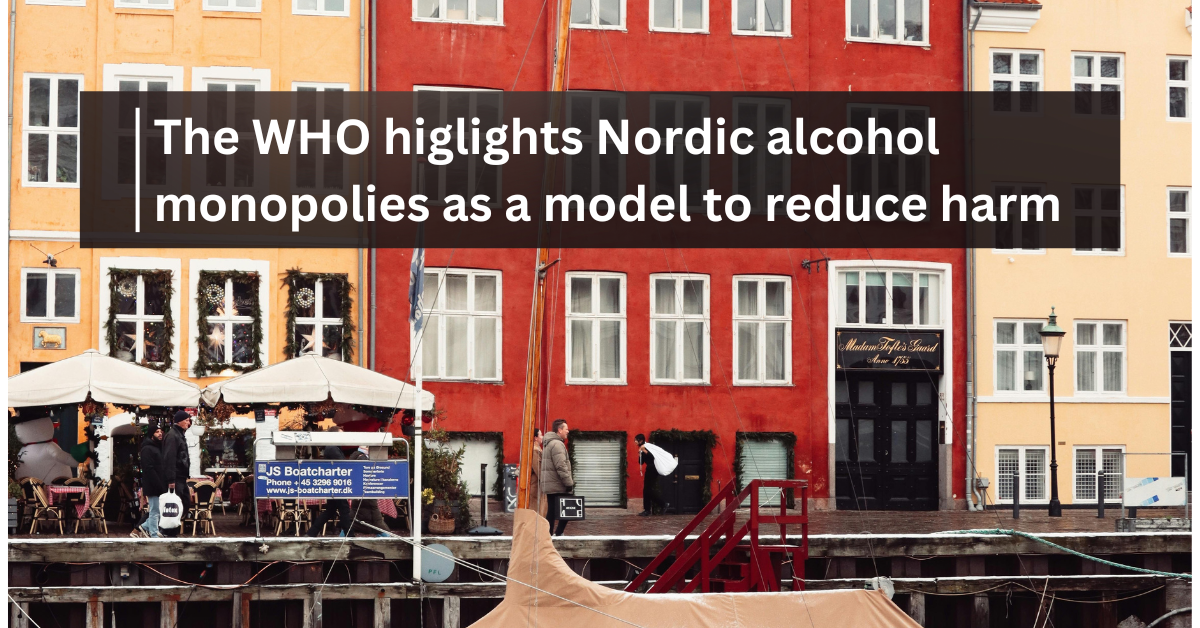
A recent report published by the World Health Organization (WHO) states that while Nordic countries have been “historically known for harmful drinking patterns and high levels of associated harm”, their strict alcohol monopolies have also lowered this consumption to below the EU average.
Currently, Nordic nations including Finland, Iceland, Norway, Sweden, and the Faroe Islands have restricted alcohol availability and limited commercial influence by preventing grocery stores and private retailers from selling stronger alcoholic beverages.
Moreover, state-owned monopolies operate with the goal to protect public health. “This public health-first approach in the management of alcohol retail sales in Nordic countries is a great demonstration of alcohol policies that work,” said Dr Carina Ferreira-Borges, Regional Adviser for Alcohol, Illicit Drugs and Prison Health at WHO/Europe, in a press release. “Countries with state-owned monopolies have lower per capita alcohol consumption compared to the EU average, and generally have lower rates of alcohol-attributable harms, which span from liver disease, cancers and cardiovascular conditions to injuries and drownings.”
Published research data shows that in 2019, the average total alcohol per capita consumption among adults in the 27 EU countries was 11.0 L of pure alcohol—twice the world average of 5.5 L. In comparison, the average in Norway was 6.8 L, while in Iceland it was 8.1 L, in Finland 9.2 L, and in Sweden 9.3 L.
Although Nordic alcohol monopolies enjoy strong public support and have demonstrated health benefits, recent legislative efforts in several Nordic countries suggest a possible move toward privatizing retail alcohol sales, potentially reversing decades of public health progress. “There is consistent evidence that the structure of the retail alcohol distribution system – in other words, how, when and where alcohol is sold – significantly affects alcohol sales,” added Dr Ferreira-Borges. “Government monopolies on off-premises retail sales have been shown to reduce alcohol consumption, while privatizing alcohol sales tends to increase consumption.”
According to a press release published by WHO, Nordic alcohol monopolies can serve as harm reduction models worldwide, demonstrating the benefits of recognizing alcohol as a “harmful product with considerable social, economic and health impacts that requires specific approaches to management.”
“[The alcohol monopolies] align closely with WHO’s 3 recommended best buys (affordable, feasible and cost-effective intervention strategies) for alcohol control: increasing taxes/raising prices, restricting availability and restricting advertising. These have consistently shown to be the most effective means of reducing alcohol-related harm on a broad scale,” states the report. “WHO/Europe calls on governments in the Region to prioritize health over profits and resist the push towards privatization, which threatens to dismantle a globally acknowledged model for reducing alcohol-related harms and protecting public health interests.”