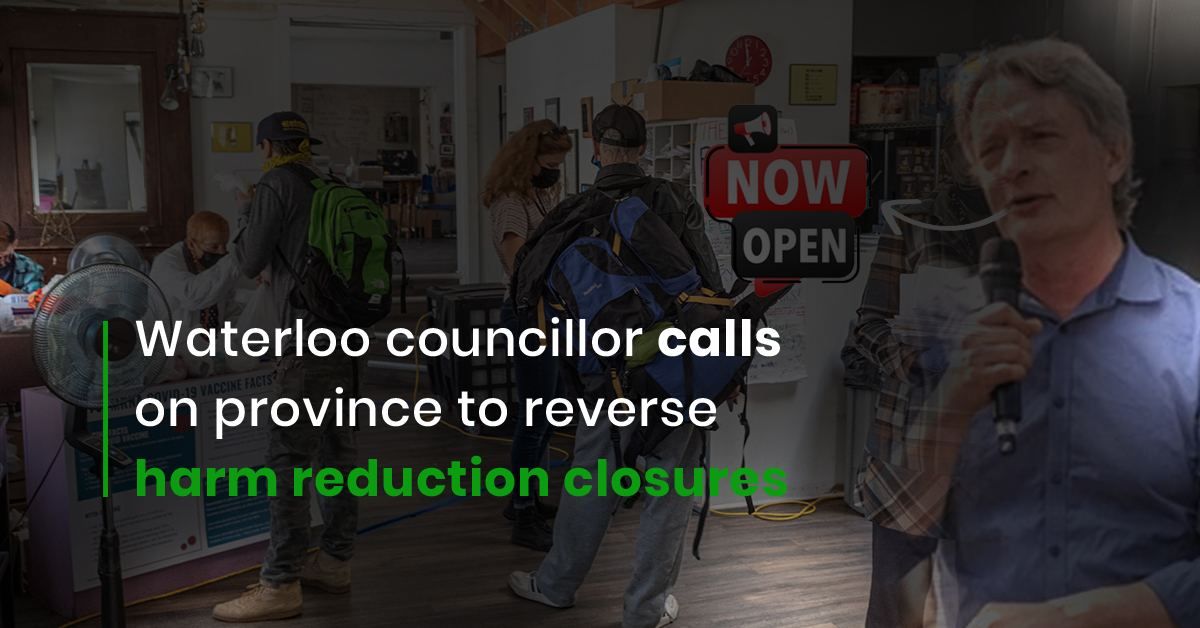
In August, Ontario Minister of Health Sylvia Jones announced the government will close 10 consumption and treatment sites that are considered to be located too close to schools and day cares, including sites in Kitchener and Guelph. According to the announcement released by the Ontario provincial government, the consumption and treatment sites in Kitchener and Guelph must close by March 31, 2025.
However, this decision was met with significant opposition, with numerous organizations and harm reduction advocates urging the government to reverse it, and to continue funding consumption and treatment sites.
“It doesn’t make sense to me as to why they would decide to shut down the consumption and treatment sites, especially when you consider the Kitchener sites been operating so successfully for a number of years,” said Region of Waterloo councillor Rob Deutschmann in his interview with CBC News. “On a whim — to me it seems like a whim — they’ve decided to go in a completely different direction.”
On September 30, the city council meeting agenda included a notice of motion, brought forward by Coun. Deb Chapman, urging the Ontario government to keep funding consumption and treatment sites. Moreover, there were 19 people scheduled to speak to councillors on the notice of motion at the meeting.
“The CTS closure, and the absence of a funded alternative, will result in deaths, injuries and other harms immediately. The additional burden on emergency services, non-profit staff, and health systems is universally unwelcome, and unnecessarily more expensive,” said a statement released by the Waterloo Region Drug Action Team, a program run by Health Canada.
The group Supportive Housing Advocacy Waterloo Region also wrote an open letter to Ontario Premier Doug Ford asking for the government to reconsider closing consumption and treatment sites.
“I really do believe there’s a humanitarian crisis out there,” said Barbara Hill, the lead for the group, in her interview with CBC News, adding that the group wrote the letter because many individuals facing a mental health and/or addiction crisis are also unhoused. “It just seems actually unbelievable to take away something that is saving lives now while we try and get support in place throughout the region, throughout the province.”
The province also announced its plans to switch focus to homelessness and addiction recovery treatment, also called HART hubs. However, notably, the HART hubs will not include the safe consumption aspect.
“I consider it a cold and heartless decision to shut down these CTS sites and not have any alternative prevention other than the HART hub, which I don’t think is going to deal with the injection issue and inhalation,” added Deutschmann. “The idea is to try to save lives for as long as we can to get people to the point of where they want to voluntarily get treatment, because involuntary treatment doesn’t work, is expensive, it’s a waste of money and people relapse.”