A recent news release published by Virginia Tech and authored by Leigh Anne Kelley discussed new scientific advances and treatments for addiction disorders. Currently, researchers at the university’s Fralin Biomedical Research Institute are developing new tools to support recovery, reduce relapse risk, and empower individuals to make healthier choices and remain engaged in treatment.
“Recovery isn’t one-size-fits-all,” said Stephen LaConte, interim co-director of the Fralin Biomedical Research Institute’s Addiction Recovery Research Center. “Across our addiction and health-behaviors research, we’re advancing personalized strategies — new statistical methods to untangle polysubstance use, brain-based biomarkers to guide care, and tech-in-the-wild experiments that ground lab insights in everyday life.”
The ongoing research is uncovering how neural pathways and the brain’s reward system drive substance use disorders, and highlighting new therapies like GLP-1 receptor agonists to curb cravings. “We’re also studying GLP-1–based therapies, which may offer holistic benefits — from diabetes management to potentially easing cravings,” LaConte added. “And through the International Quit & Recovery Registry, launched by founding director Warren Bickel, we learn directly from people in recovery what helps them succeed.”
Recently published research by Virginia Tech includes the following findings:
Brain imaging studies reveal a promising therapy for addiction: Since addiction tends to favour immediate rewards over long-term health, researchers tested episodic future thinking, a technique that encourages people to vividly picture positive future events. The approach was linked to changes in key brain regions and showed potential to strengthen decision-making and reduce impulsive behaviour.
Relapse is a frequent part of recovery, often requiring several quit attempts before long-term success. Researchers have shown that the number of quit attempts needed during recovery varies by substance and individual circumstances. Their findings highlight the value of early intervention in boosting recovery rates and reducing relapses, while also offering realistic expectations and practical guidance for both patients and clinicians.
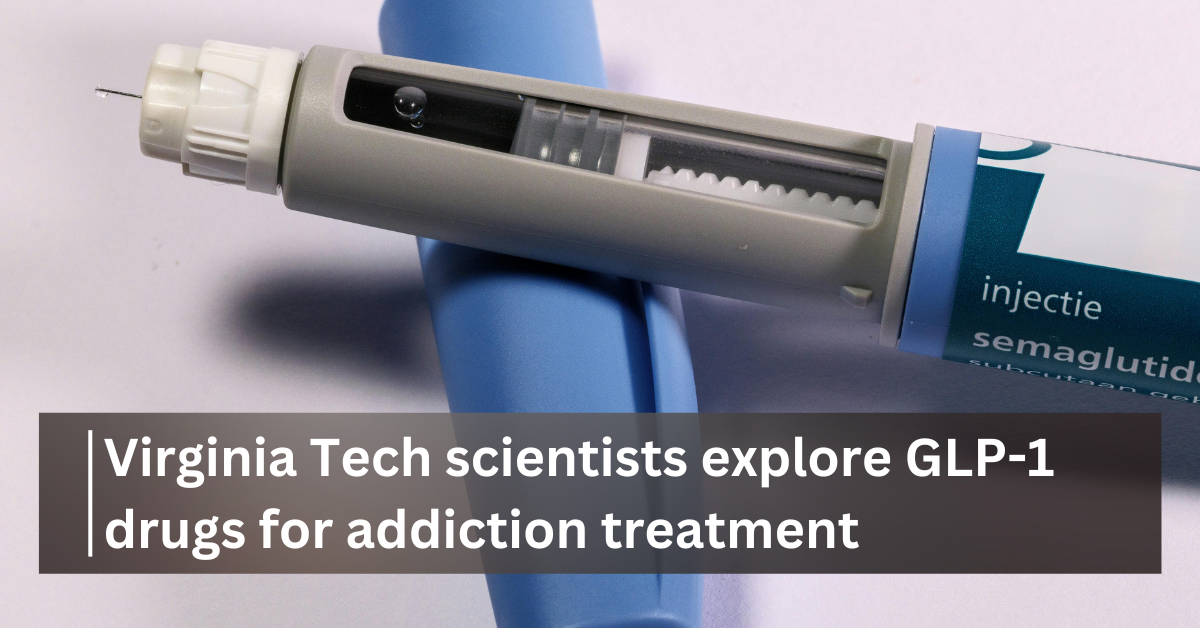
The role of diabetes and weight-loss medications in treating alcohol use disorder. Researchers are exploring GLP-1 receptor agonists, drugs first developed to treat Type 2 diabetes, as potential therapies. Early studies suggest they may lessen alcohol cravings by acting on brain reward pathways, opening the door to new options for supporting recovery.
Learning from people in recovery to strengthen care. Established in 2011 by the Fralin Biomedical Research Institute, the International Quit & Recovery Registry helps to bring together a global community of over 10,000 individuals in recovery. This resource has become a valuable tool for researchers, helping refine recovery programs and uncover the psychological and social factors that support lasting success.