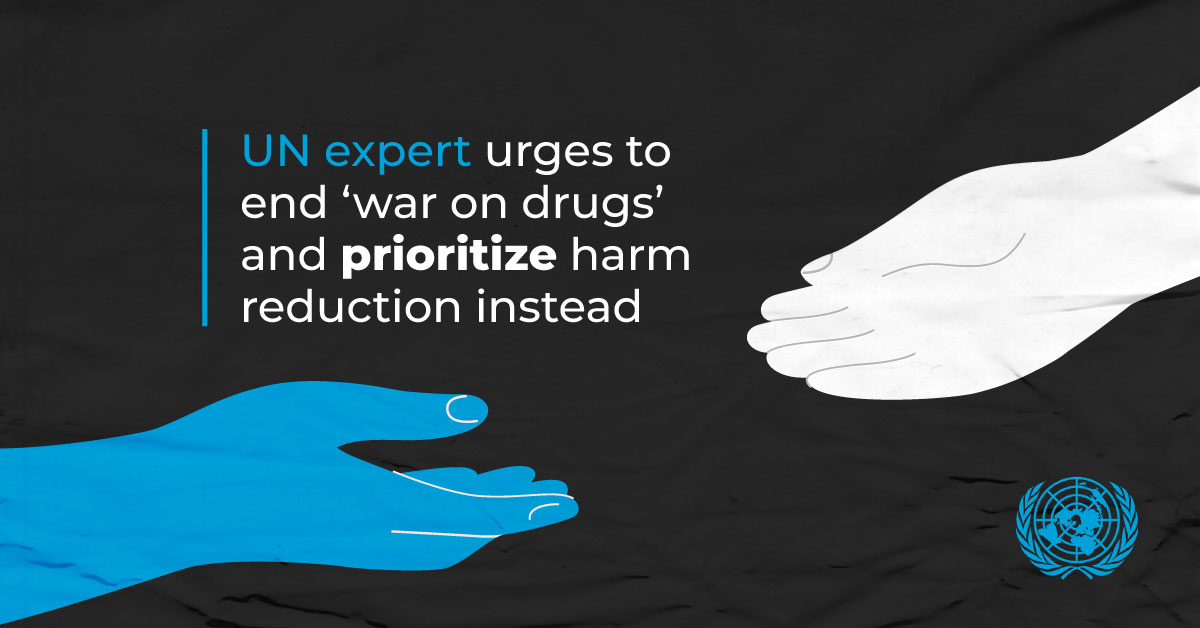
Earlier in June, Dr. Tlaleng Mofokeng, a United Nations (UN) independent expert called on its member states to end the ‘war on drugs’ and to focus on harm reduction in drug policies instead. As part of her fourth report to the UN Human Rights Council, Dr. Mofokeng, a Special Rapporteur on the right to health, focused on evaluating reduction in the context of drug use and drug use disorders, as well as to drug laws and policies, in order to examine and address the related outcomes that “adversely impact the enjoyment of the right to health.”
The report findings show that the concept of harm reduction has been primarily developed in the context of drug use and refers to policies, programs and practices that are aimed at reducing negative health, social and legal impacts associated with drug use, drug policies, and drug laws. Moreover, it highlights the states’ obligation to implement evidence-based interventions to minimize the adverse health outcomes, risks, and harms associated with drug use.
“The enforcement of drug laws and policies compounds other forms of discrimination and disproportionately affects certain individuals, such as persons in situations of homelessness or poverty, persons with mental health issues, sex workers, women, children, LGBTIQA+ persons, Black persons, Indigenous Peoples, migrants, persons who are incarcerated or detained, persons with disabilities, persons living with HIV, tuberculosis or hepatitis, and persons living in rural areas,” Dr. Mofokeng said to the UN Council during the meeting held on June 24. “International drug control conventions have negatively affected the availability, accessibility, acceptability and quality of certain drugs used as medicines.”
As part of the report, Dr. Mofokeng sought to provide recommendations on keeping the states’ focus on dignity, public health and human rights, in addition to interventions using the best available evidence that is free from conflicts of interest.
Furthermore, Dr. Mofokeng noted that ending criminalisation, stigmatisation, and discrimination that create structural barriers to accessing services will also improve access to information, goods, services, and facilities.
“Global advocacy and high-level statements of intent must be put into action to uphold the right to dignity,” she said during the meeting. “All stakeholders must respect people who use drugs, people with drug use disorders and people whose health and well-being is affected by drug laws and policies.”