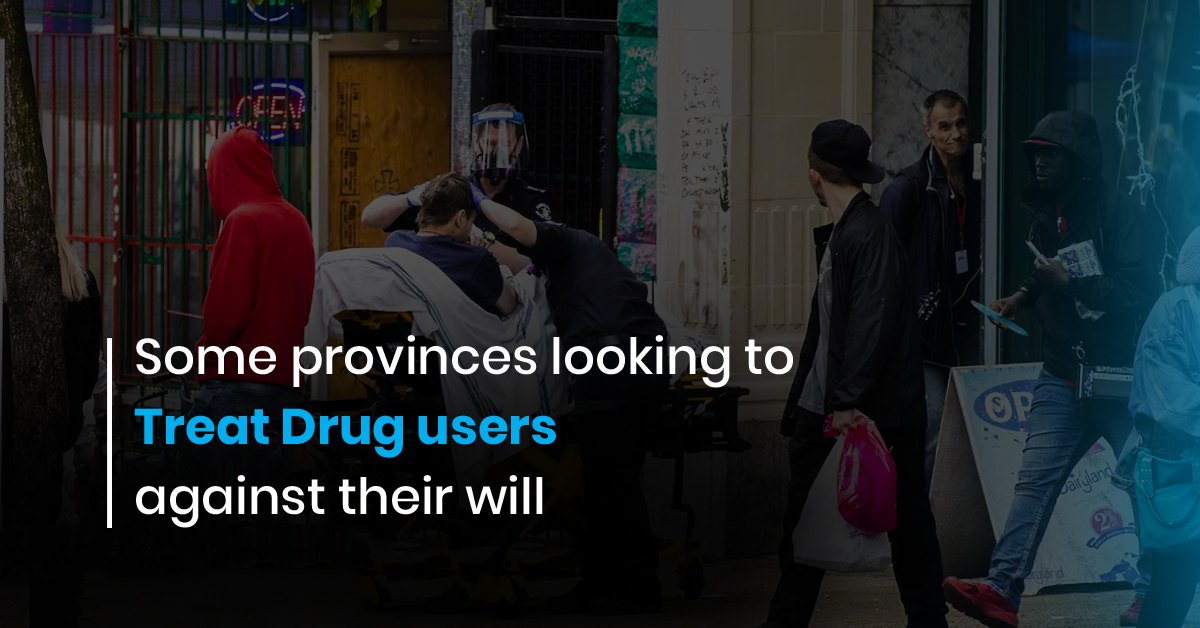
Earlier in September, the British Columbia government announced its plans to expand involuntary care for those with mental health and addictions issues, as well as open “highly secure” facilities, to provide housing for people detained under the Mental Health Act throughout the province.
According to B.C. Premier David Eby, the expansion is aimed to help those with brain injuries, mental illnesses, and severe addiction. “We’re going to respond to people struggling like any family member would,” Eby said in a statement to the media. “We are taking action to get them the care they need to keep them safe, and in doing so, keep our communities safe, too.”
In addition, the Alberta government is currently preparing legislation that would allow a family member, police officer or medical professional to petition to force treatment when an individual is deemed to be an imminent danger to themselves or others due to addiction or drug use.
New Brunswick is also pursuing legislation that involves individuals afflicted with addiction becoming subject to involuntary treatment following a medical evaluation process. “We’re not looking to arbitrarily just drag people into some sort of incarceration,” said Kris Austin, New Brunswick’s health minister, in a press release. “It would be more than simply the minister of public safety to determine that, or even a police officer. This is something that the medical profession really has to have the final say on, whether treatment is warranted.”
The opinions of health experts and harm reduction advocates on involuntary care have been mixed, with some pointing to the lack of clear evidence to justify coercive treatment, as well as the lack of existing voluntary care. “Involuntary treatment is being presented as a relatively simple solution to quite a complex problem,” said Elaine Hyshka, associate professor at the University of Alberta’s School of Public Health and Canada Research Chair in Health Systems Innovation, in her interview with Reuters.
Moreover, critics of expanding involuntary have voiced concerns over the risk of subsequent overdoses, as well as deterring people away from seeking help, while civil liberties groups have warned about violations of constitutional rights.