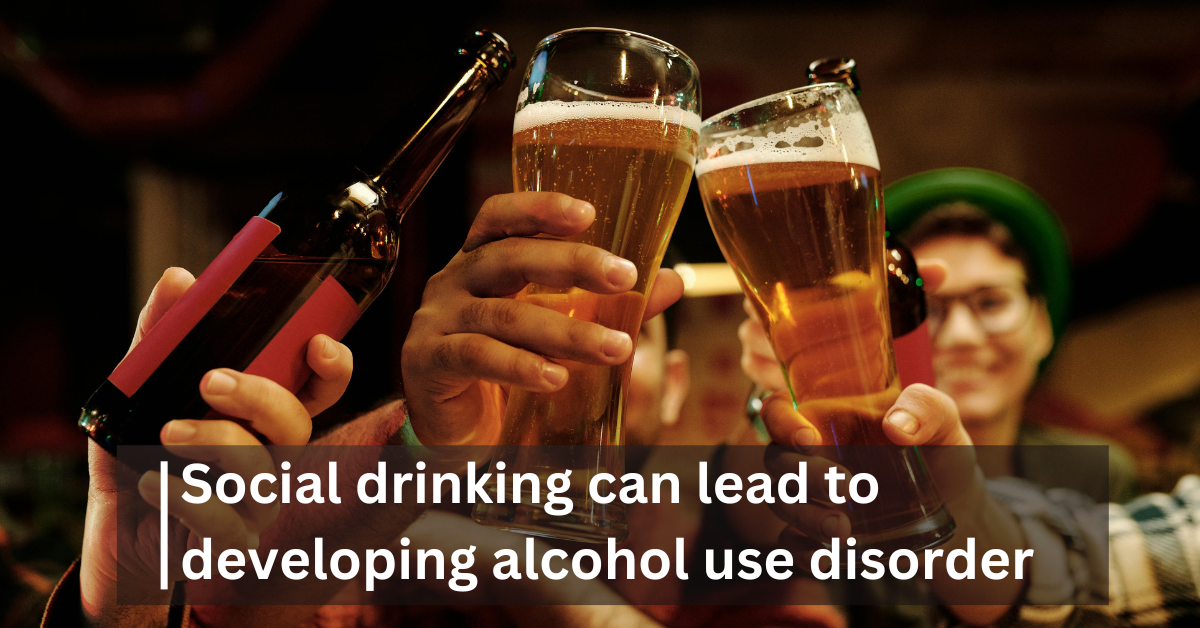
According to the results of a new review study, social drinking can play an important role in the development and consequences of alcohol use disorder (AUD), particularly among young people. The new research, published in the peer-reviewed journal Current Directions in Psychological Science, challenges the notion that AUD mainly results from solitary drinking.
“While solitary drinking might serve as a useful early indicator of alcohol use disorder risk … research suggests that individuals reliably consume more alcohol in social contexts than when alone,” wrote the authors. In addition, the authors noted that the idea that problem drinkers are typically solitary drinkers usually dominates in popular portrayals of alcoholism and continues to shape the way scientific studies are designed.
While solitary drinking is usually involved in the most severe cases of alcohol use disorder, ” focusing exclusively on solitary drinking ignores behaviours responsible for the majority of alcohol-related societal harms,” said Dr. Catharine Fairbairn, professor of psychology at the University of Illinois Urbana-Champaign, in an interview.
The authors also noted that young people often begin alcohol consumption with their peers, and heavy drinkers tend to seek out other heavy drinkers to consume alcohol together. Research also shows that people tend to consume more alcohol in social settings than in private.
“Some of the most serious negative consequences from alcohol use are linked specifically with social consumption,” wrote the authors. “In particular, alcohol-related violence, risky sex, and extreme binge drinking are all primarily or exclusively social-drinking phenomena.”
Since alcohol can reduce anxiety and inhibitions, it can help to facilitate social interactions and make them more enjoyable. According to the authors, these effects of alcohol help explain its widespread use as a means of strengthening social bonds. In addition, research has shown that individuals who derive the most pleasure from social drinking are also more susceptible to developing alcohol-related issues. What’s more, some evidence suggests that people may use alcohol as a way to cope with or repair strained relationships.
Importantly, the authors also suggest that many alcohol-related social attractions also apply to other substances that are gaining social acceptance, such as cannabis. “As an addictive drug that enjoys an extraordinary level of integration into human social life, alcohol foreshadows legal and medical dilemmas ahead,” they wrote.