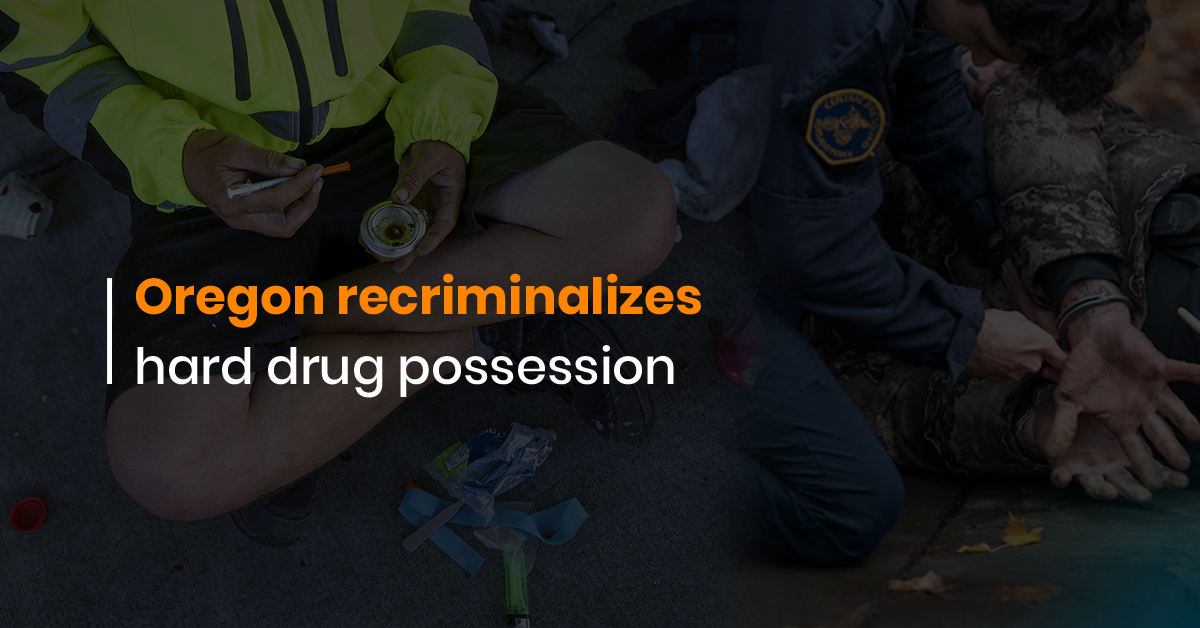
On Sept 1, Oregon reinstated criminal penalties for the possession of illicit drugs with House Bill 4002 coming into effect. As part of the new recriminalization law, individuals caught with possession of drugs including fentanyl, heroin, and methamphetamines will receive the choice to either be charged with drug possession or treatment, the latter of which involves completing a behavioural health program and participating in a “deflection program” to avoid fines.
The new legislation reverses Measure 110 passed in 2020, which decriminalized the possession of small amounts of several types of illicit drugs in order to prioritise treatment over criminalization.
However, under the new law, personal-use possession is considered as a misdemeanor punishable by up to six months in jail, making it easier for police to address drug use in public, as well as implementing harsher penalties for selling drugs near public places such as parks.
According to supporters of the new legislation, reversing decriminalization and reinstating criminal penalties is essential for creating a clear deterrent against public drug use, potentially resulting in reduced drug use and improved public safety.
Meanwhile, the move to recriminalize illicit drugs in Oregon has also faced significant criticism. Specifically, the new legislation’s opponents argue that it could undermine the progress made in treating drug addiction as a public health issue rather than a criminal problem, leading to increased imprisonment rates among individuals struggling with substance abuse, while exacerbating related social and economic challenges.
In his interview with The Guardian, Kellen Russoniello, the director of public health at the Drug Policy Alliance, said that a potential influx of new drug cases could further strain Oregon’s legal system, which is already struggling with a critical public defender shortage, and the focus should be on increasing treatment capacity.
“We really need to focus on having the services available for folks if any of these deflection programs are going to be successful,” he said.
Since 2020, Oregon invested over $1.5bn to expand addiction treatment capacity and has funded more than 350 new beds scheduled to be available next year, according to a report by the Oregon Health Authority. However, the report also determined that the state still needs as many as 3,700 beds to close gaps and meet future demand.
“Too many Oregonians are struggling to get the help they need for a mental health or addiction challenge, and the state needs to lead with a strategic approach to addressing these gaps in health care,” said Governor Kotek in a press release. “We need more resources, to be sure, but we also need better data so we can better serve Oregonians. This preliminary assessment tells us more about the gaps we need to fill to ensure Oregonians in every corner of the state can access the care they need, when they need it.”