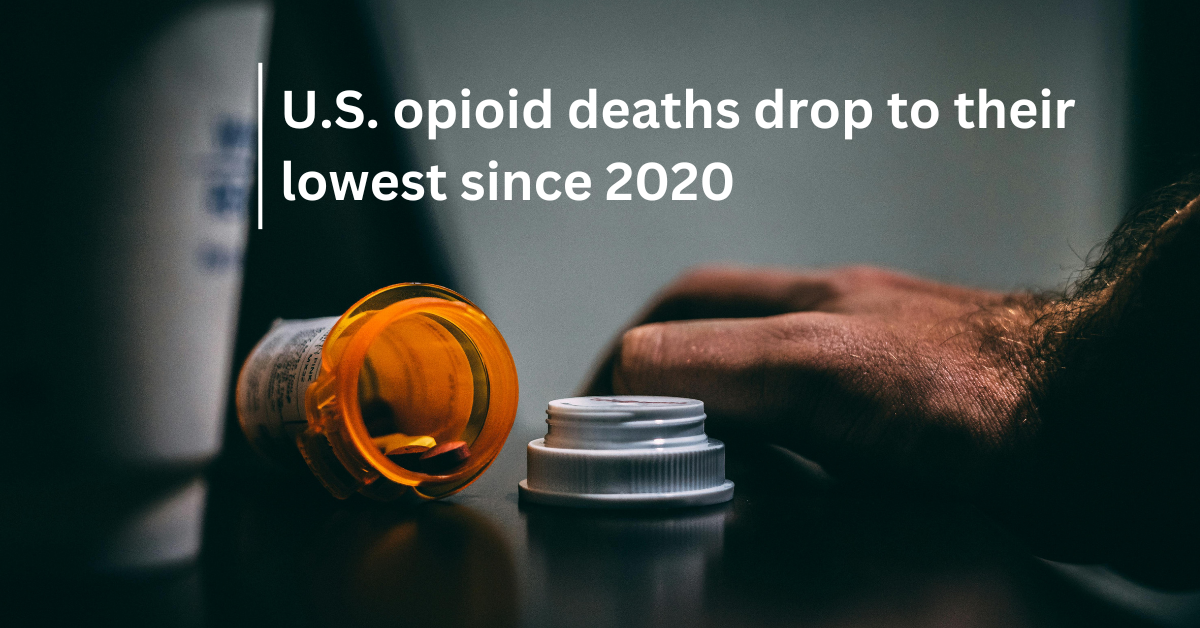
According to new data released by the U.S. Centers for Disease Control and Prevention (CDC), overdose deaths in the country declined by approximately 18% from June 2023 to June 2024.
In addition, overdose-related emergency room visits for overdose were decreased by 24% and 911 first-responder calls for overdoses were reduced by 16.7%. Some of the biggest declines in overdose deaths have been recorded in eastern states, while some western states are still experiencing higher rates.
“While these data are cause for optimism, we must not lose sight of the fact that nearly 100,000 people are still estimated to be dying annually from drug overdose in the U.S.” said Dr. Nora Volkow, director of the National Institute on Drug Abuse, in a released statement. “It’s also important to acknowledge that progress has not been equal for all groups,” she said. “Unfortunately, for the most affected groups, namely Native Americans and Black American men, the death rates are not decreasing and are at the highest recorded levels.”
Furthermore, there has also been a decrease in U.S. overdoses related to other drugs, such as methamphetamine and cocaine. We are encouraged by this data, but boy, it is time to double down on the things that we know are working. It is not a time to pull back, and I feel very strongly, and our data shows, that the threat continues to evolve,” Dr. Allison Arwady, head of the CDC’s National Center for Injury Prevention and Control, said in her interview with CBS News.
So far, public health experts have proposed several explanations for the decline in the overdose death rate across the U.S. According to some researchers, this trend is the result of changes in the drug supply and improved access to treatment and harm reduction programs. “Looking back over the last quarter-century, there’s been no intervention that has caused a decline in overdose deaths of this magnitude,” said Dr. Nabarun Dasgupta, a senior scientist at the University of North Carolina (UNC) in his interview with the Guardian. “It’s unprecedented.”
An analysis authored by Dr. Desgupta earlier in September as part of his work at the UNC Opioid Data Lab examined a number of theories to account for this phenomenon. “Our hypothesis is that something has changed in the drug supply. This kind of pronounced shift, something that happens suddenly, if numbers had suddenly shot up, we would definitely be pointing to a change in the drug supply to explain it,” he said.
Furthermore, he suggested that the increase in popularity of the drug xylazine may have led to reduced injection drug use, and the longer high it produces could also be decreasing the number of times people use fentanyl per day. “We’re not in our offices celebrating. We’re still losing too many people that we love. So I just want it to be very clear that with like a hundred thousand people still dying, that’s obscenely high,” he said.