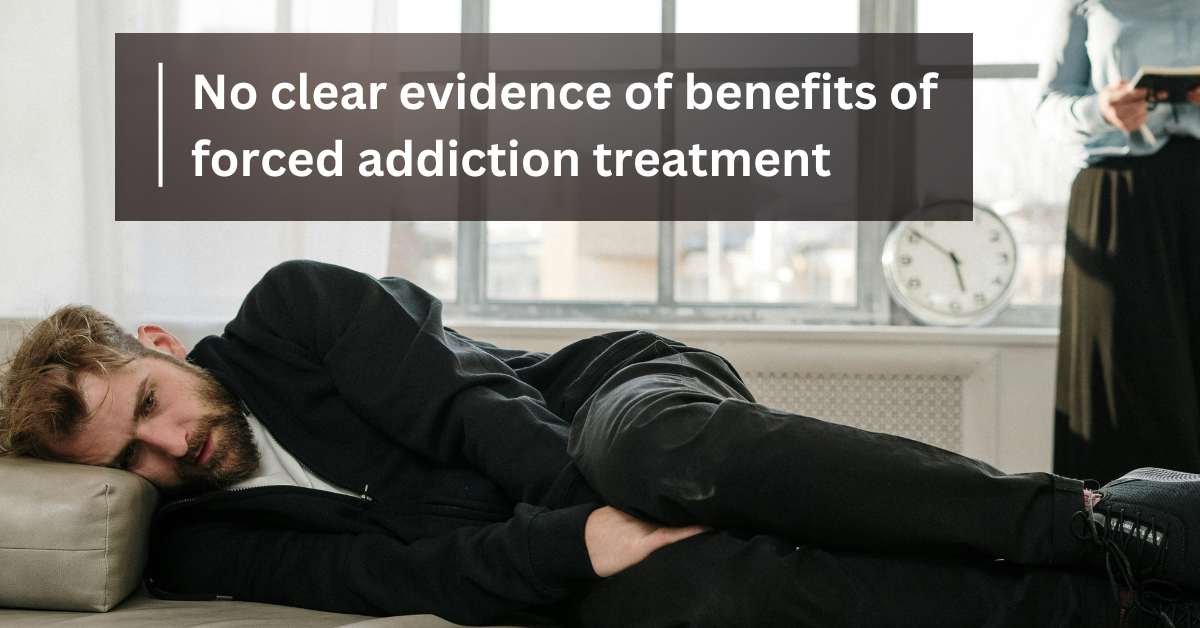
A recent analysis published by CBC News and authored by Mike Crawley concluded that there is no clear evidence showing efficacy for forced treatment for individuals suffering from addiction disorders. In recent years, a number of Canadian legislators have proposed the idea to introduce mandatory treatment programs for people suffering from drug addiction. However, a recent research review demonstrated inconclusive evidence regarding its effectiveness. In addition, this approach was criticized by some Canadian experts in addiction medicine as an “easy answer to a complex health and social problem.”
“It’s a response to seeing pain and suffering in front of you and saying, ‘I don’t want to have to see this, so let’s just make sure that this is out of the way,'” said Dr. Anita Srivastava, medical director of addiction medicine for Unity Health in Toronto, in her interview with CBC News. “I think it’s a frustrated response to a problem that [people] perceive as having no real solution,” said Srivastava in an interview. “I don’t think it will work, but I can understand where it might be coming from.”
In 2023, a task force created by the Canadian Society of Addiction Medicine (CSAM) published its review of research regarding the effectiveness of involuntary treatment for addiction disorders. Specifically, the systematic review examined 42 studies and found that out of the 22 studies which compared involuntary and voluntary treatments, 10 reported negative outcomes from involuntary treatments, five found no significant differences, and seven determined improvements, mainly in retention in treatment. What’s more, only one of these seven studies showing benefits also demonstrated a post-treatment reduction in substance use; however, it was not sustained long-term. “There is a lack of high-quality evidence to support or refute involuntary treatment for [substance use disorders],” concluded the report. “More research is needed to inform health policy.”
In addition, criticisms of involuntary drug addiction treatment also noted that implementing involuntary treatment for substance addiction would require a province to amend its healthcare consent legislation. “We have to be realistic about the fact that addiction is a chronic disorder,” said Dr. Keith Humphreys, a professor of psychiatry at Stanford University, who was also chair of Alberta’s expert advisory panel on addiction recovery. “When we talk [about] forcing people into treatment, we should remember there aren’t really many people who would be just spontaneously waking up in a tent and saying, ‘I don’t want ever to use fentanyl ever again.'”
Finally, health experts and opponents of involuntary addiction treatment have also cited the lack of existing resources for voluntary treatment. “We have this massive disparity between the number of people who are referred to treatment and the capacity of the treatment system to meet that demand,” said Dan Werb, executive director of the Centre on Drug Policy Evaluation at St. Michael’s Hospital in Toronto. “The scientific evidence to support [involuntary treatment] as an effective approach just simply isn’t there.”