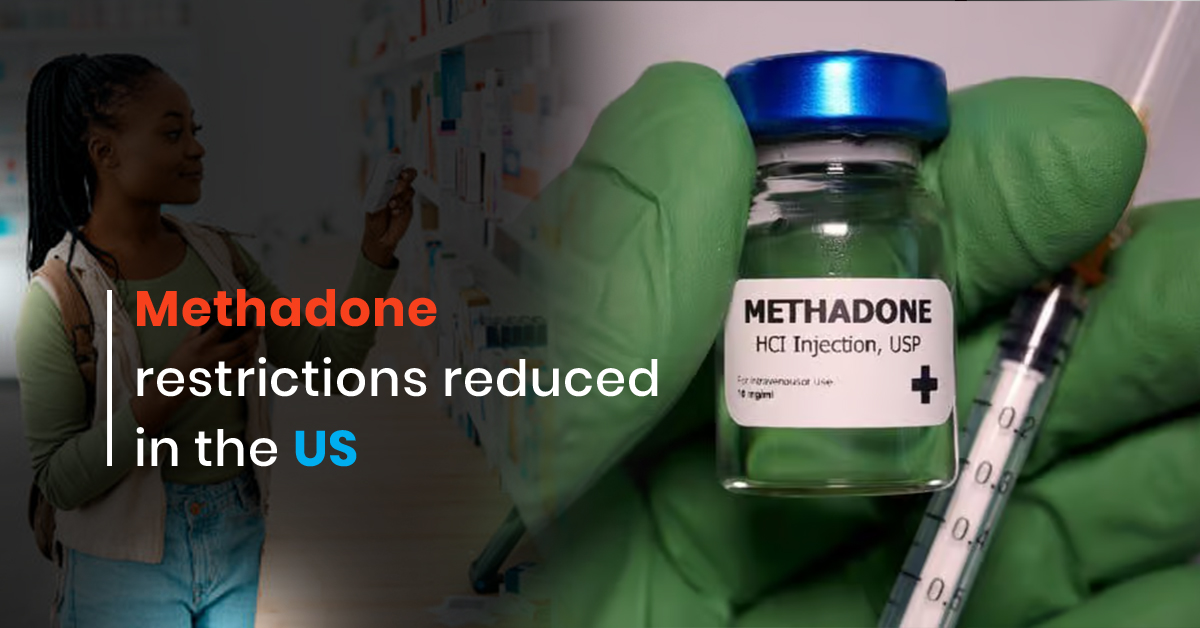
Starting in April of this year, the U.S. federal government eased some of the rules around the treatment for opioid addiction, aimed to expand access to the life-saving drug. According to a new federal rule, patients who are receiving treatment for addiction disorders at clinics and who are deemed ‘stable’ can take home 28 days’ worth of methadone. Moreover, multiple states including New York, Colorado, and Massachusetts are updating their rules accordingly. However, other states, including Tennessee and West Virginia, which have the highest overdose-related death rates in the U.S. have not taken the necessary steps to comply with the new regulations.
The new regulations were initially implemented during the COVID-19 pandemic as a temporary measure. However, research studies later showed that the eased regulations did not increase overdose deaths and drug diversion, while individuals stayed in treatment longer.
Health experts have already cited concerns around the difficulty of implementing the new changes at clinics located in states that do adopt the federal rules. “When you look at a whole system of 2000-plus treatment programs, it’s like watching an aircraft carrier change course in the middle of the ocean,” said Mark Parrino, head of the American Association for the Treatment of Opioid Dependence, a trade group for methadone clinics, in his interview with NPR. “It does so, but it does so carefully.”
According to Parrino his group approves of the new changes, but some members are concerned regarding liability when patients are not closely supervised. Moreover, he noted that patients can overdose on methadone, which is itself an opioid.
“Methadone is a very therapeutic medication when it’s used wisely,” Parrino said. “But if it’s used unwisely, it’s unforgiving.”
In addition, he cited financial concerns, since many clinics are for-profit and are run by private equity firms , they are waiting to see whether Medicaid changes the way it pays for methadone treatment when patients come in less frequently. “The programs absolutely lose money. Some would not be able to continue,” he said.
Frances McGaffey, who works for the nonprofit Pew Charitable Trusts, said payments to clinics can be tied to in-person dosing, which can discourage take-home treatment. “States should be looking at their payment policy and see what kind of care they’re incentivizing,” she said in her interview with AP News.
For instance, in Arizona, clinics get $15 per in-person dose from the state’s Medicaid program vs. about $4 per take-home dose. Currently, the state is considering making those amounts equal or implementing “bundled payment,” a model that reflects the overall cost of treatment. “States should be looking at their payment policy and see what kind of care they’re incentivizing,” said Gaffey.