According to the results of the new study published in the peer-reviewed journal Trends in Ecology and Evolution, a wide range of animal species consume ethanol as part of their diet, usually in the form of fermented fruits, sap, and nectar. The research results “challenge current belief that modern humans are the only vertebrate that regularly and uniquely consumes ethanol and leads us to reconsider ethanol’s ecological role and evolutionary impact in nature,” stated the authors in their manuscript. The review study is a collaboration between scientists from .. the University of Exeter, the University of Calgary, and the College of Central Floria.
“We’re moving away from this anthropocentric view that alcohol is used by just humans and that actually ethanol is quite abundant in the natural world,” said Dr. Anna Bowland, a researcher from the University of Exeter, and one of the study’s authors.
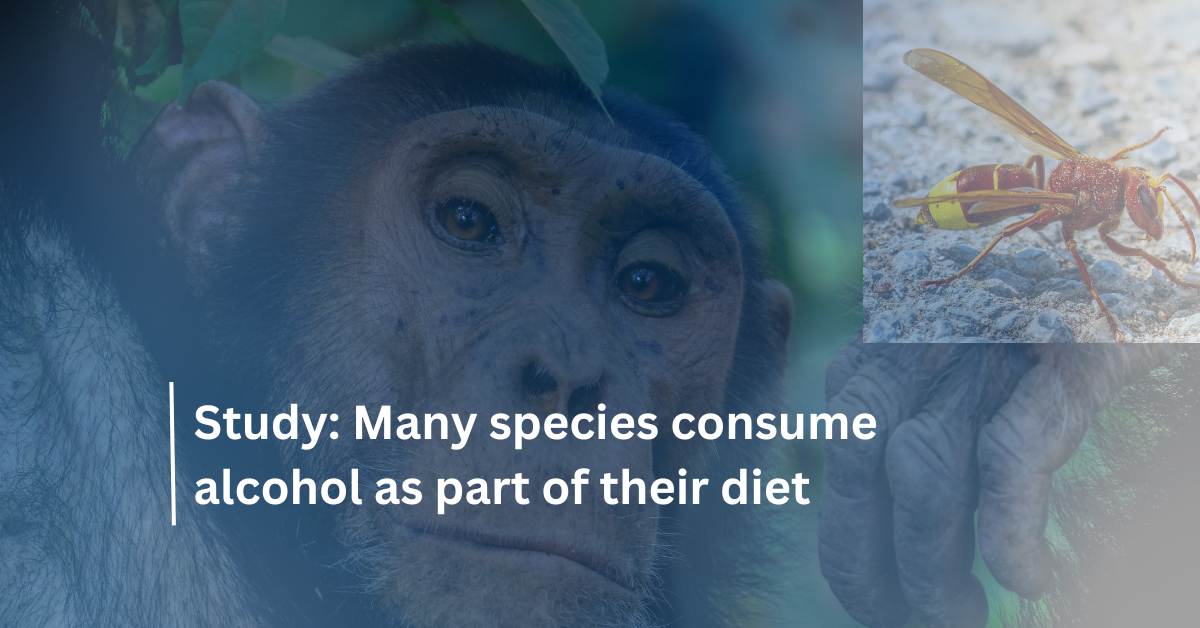
Previous studies have already shown that primates, including chimpanzees and spider monkeys, feast on alcohol-containing fruit. “Evidence is growing that humans are not drinking alone,” stated the study’s authors in the article. While other animals seem to become inebriated, others have developed high alcohol tolerance. Specifically, animals that regularly eat fermented foods have rapid alcohol metabolism, allowing them to avoid intoxication. One recent study showed that oriental hornets may be the only animals capable of consuming an unlimited amount of alcohol without suffering any side effects. “They can ingest up to 80% ethanol solution without any negative effects on their mortality or behaviour,” said Dr. Sophia Bouchebti, researcher at Tel Aviv University and an author of the study.
It was also found that male fruit flies increasingly consume alcohol when they are rejected as a mate, whereas females of a closely related fly species become less selective about their mates after alcohol consumption.
“Aside from the fruit fly, aye aye and slow loris, it is unclear if animals prefer ethanol-containing food,” said Dr. Matthew Carrigan, a researcher at the College of Central Florida and the study’s senior author. “One of our next steps is the test whether animals in the wild prefer ethanol-containing food or eat it only when ethanol levels are too low to detect or unfermented fruit is hard to find.”