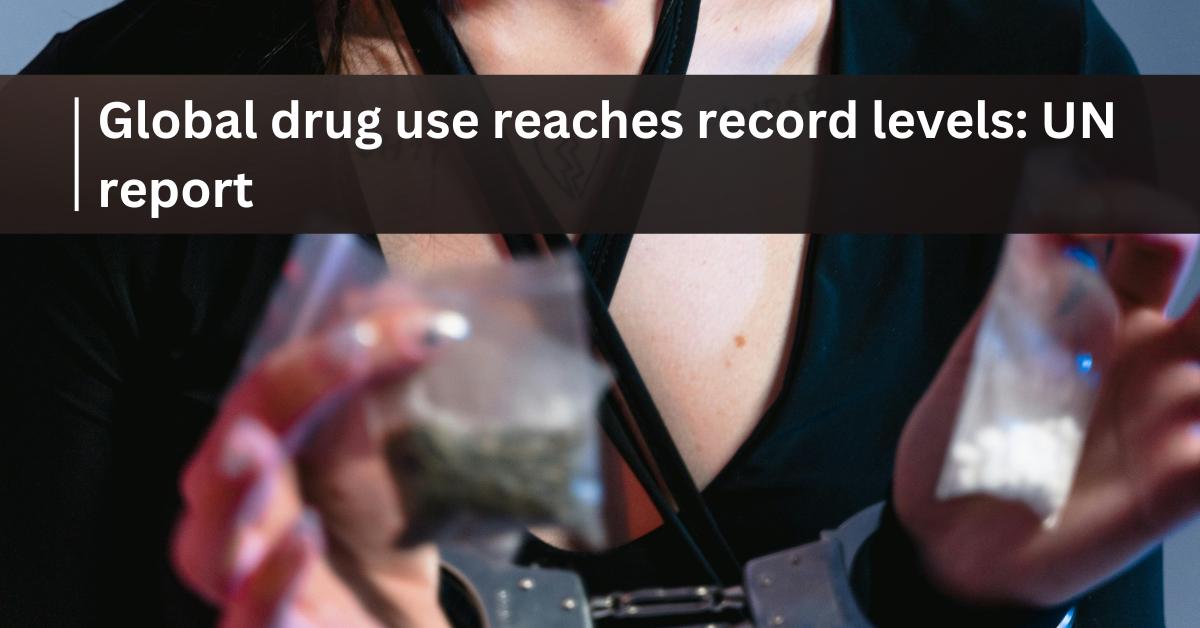
The 2025 World Drug Report, published by the United Nations Office on Drugs and Crime, evaluated data collected in 2023 and 2024 to provide an overview of global drug use trends, health impacts and policy developments worldwide. According to the report findings, global drug use has reached historically high levels, with an estimated 316 million people, or 6% of the global population aged 15 to 64 years using drugs in 2023, corresponding to an increase from 246 million recorded in 2013.
Specifically, it was found that cannabis remains the most widely used drug, while cocaine is the fastest-growing illicit drug market globally, with significant increases since 2017. The report also shows that although growth in cocaine use is strongest in emerging markets such as parts of Africa and Asia, its overall prevalence remains higher in North America and Europe.
The report findings also reveal that drug use remains disproportionately higher among men, who account for about three-quarters of individuals who use drugs globally, although the gender gap varies by region and drug type. It was found that women are less likely to use most illicit drugs but may progress to dependence more quickly and face greater health and social harms compared to men, while also encountering more barriers to treatment. In contrast, non-medical use of pharmaceutical drugs is often similar between men and women in some countries.
The report also demonstrates that among young people, drug use prevalence is similar to or higher than among adults, and early initiation significantly increases the risk of substance use disorders, premature death, and long-term negative health and social outcomes. Moreover, fentanyl seizures have been carried out almost entirely by North America, accounting for 99% of global seizures, which increased sharply since 2015, reaching 19.5 tons worldwide in 2023, with most U.S. seizures between 2022 and 2024 originating in Mexico. At the same time, overdose deaths linked to synthetic opioids have begun to decrease, falling by 36% in the United States between 2023 and 2024 and by 12% in Canada during the first nine months of 2024 compared with the same period in 2023.
In terms of estimated harms, drug use accounted for an estimated 27.7 million disability-adjusted life years (DALYs) globally in 2021, which is a measure of healthy years of life lost due to disability and premature death. These figures correspond to nearly double the burden recorded two decades ago. Opioid use disorders were the largest contributor to DALYs, followed by cirrhosis and chronic liver disease largely linked to hepatitis C, as well as HIV/AIDS and drug-related cancers, particularly liver cancer associated with injecting drug use.
The report also indicates that although cannabis has been frequently cited by countries as a leading cause of drug use disorders and treatment entry, opioids account for the greatest number of people in treatment worldwide. Overall, the results show that much of the health burden could be prevented through expanded access to opioid agonist therapy, naloxone distribution, and harm-reduction services such as needle and syringe programs, which have been shown to significantly reduce hepatitis C transmission and overdose risk.