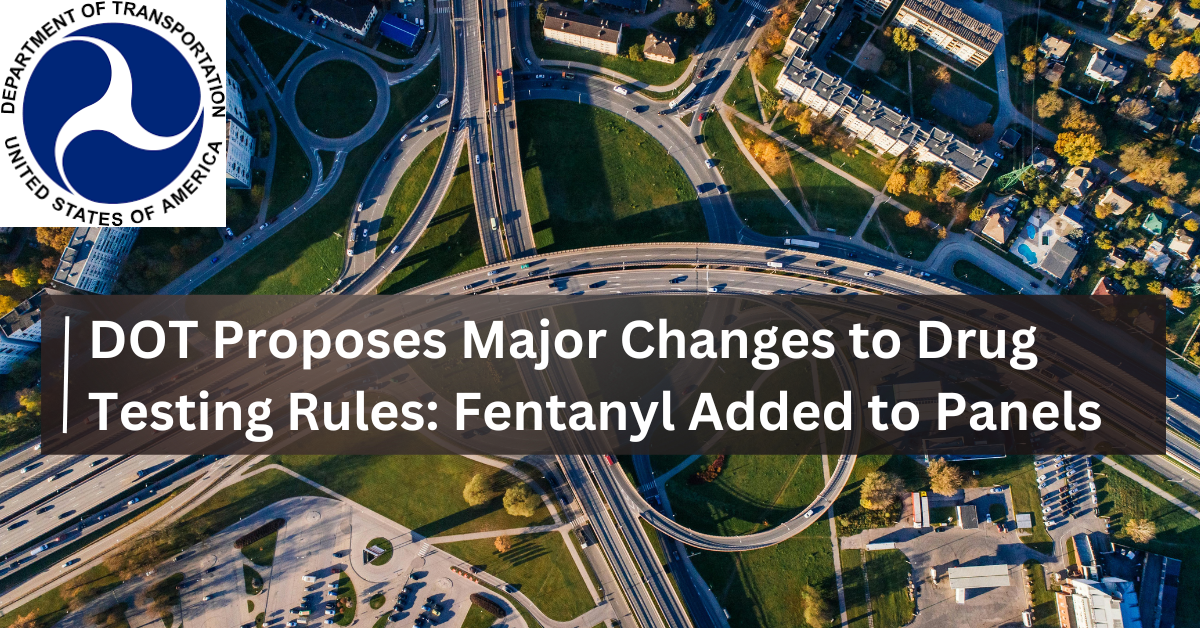
On September 2, 2025, the U.S. Department of Transportation (DOT) published a Notice of Proposed Rulemaking (NPRM) in the Federal Register, outlining a series of significant updates to federal drug and alcohol testing regulations. These proposed changes could impact collectors, laboratories, Medical Review Officers (MROs), and employers across DOT-regulated industries.
Comments are open until Oct. 17th, 2025 and can be made HERE.
Key Proposed Changes
The NPRM includes several critical updates to testing requirements, definitions, and procedures. Among the most notable:
1. Addition of Fentanyl and Norfentanyl to Testing Panels
For the first time, fentanyl and its primary metabolite, norfentanyl, would be included in DOT’s drug testing panels. Given the sharp rise in fentanyl-related overdoses and its prevalence in illicit drug markets, this addition reflects urgent public health and safety concerns.
2. Adjustment to Morphine Confirmatory Cutoff (Urine Only)
Laboratory confirmation thresholds for morphine in urine testing would be revised, aligning testing practices with updated scientific and regulatory guidance.
3. Change in MRO Requirements for Opioid Use
The current requirement for MROs to determine clinical evidence of illegal opioid use (codeine and morphine in urine and oral fluid tests) would be removed, streamlining the review process.
4. Authorization of Biomarker Testing
The NPRM introduces the possibility of biomarker testing as an approved tool. This could significantly broaden the scope of how drug use is monitored and confirmed in regulated testing.
5. Revised Cannabis Nomenclature
Updates to analyte terminology for cannabis in both urine and oral fluid testing are proposed, ensuring clarity and consistency with laboratory science.
6. Updates to Alternate Technology Testing
Footnote #1 in the testing panels would be revised to clarify criteria for alternate technology initial drug tests, incorporating more specific and updated standards.
7. Training Requirements for Collectors, STTs, and BATs
The NPRM proposes a 30-day timeframe within which collectors, screening test technicians (STTs), and breath alcohol technicians (BATs) must complete required training and mock collections.
8. New ‘Fatal Flaw’ for Oral Fluid Specimens
A new fatal flaw category would be added, specifically addressing oral fluid specimens. This change would affect how laboratories and employers handle invalid collections.
9. Oral Fluid Testing Updates
Several provisions related to oral fluid specimens would be revised, including collector training, shy bladder/dry mouth procedures, and technical clarifications.
10. Technical and Clarifying Amendments
Additional changes include updates to SAP documentation and other technical corrections designed to improve clarity and consistency across the regulations.
Why These Changes Matter
The addition of fentanyl to DOT testing panels marks one of the most significant expansions in recent years. Fentanyl is a leading contributor to the opioid crisis, and its inclusion underscores the DOT’s focus on safety-sensitive workers in transportation industries.
The streamlining of MRO reviews, updates to oral fluid collection rules, and the potential use of biomarker testing demonstrate DOT’s intent to keep pace with scientific advancements and real-world challenges in drug testing.
For employers, service agents, and collectors, these proposed changes highlight the need for ongoing training and adaptation to remain compliant once final rules are issued.
At DATAC, we are committed to ensuring that Canadian collectors, administrators, and employers remain informed about developments in U.S. DOT regulations. Many Canadian professionals conduct collections for U.S.-regulated employees, meaning these changes—especially the addition of fentanyl to testing panels—will have a direct impact on Canadian workplaces and service providers.
We will continue to monitor the progress of this NPRM and provide training and resources to help our members remain compliant and legally defensible in their work.