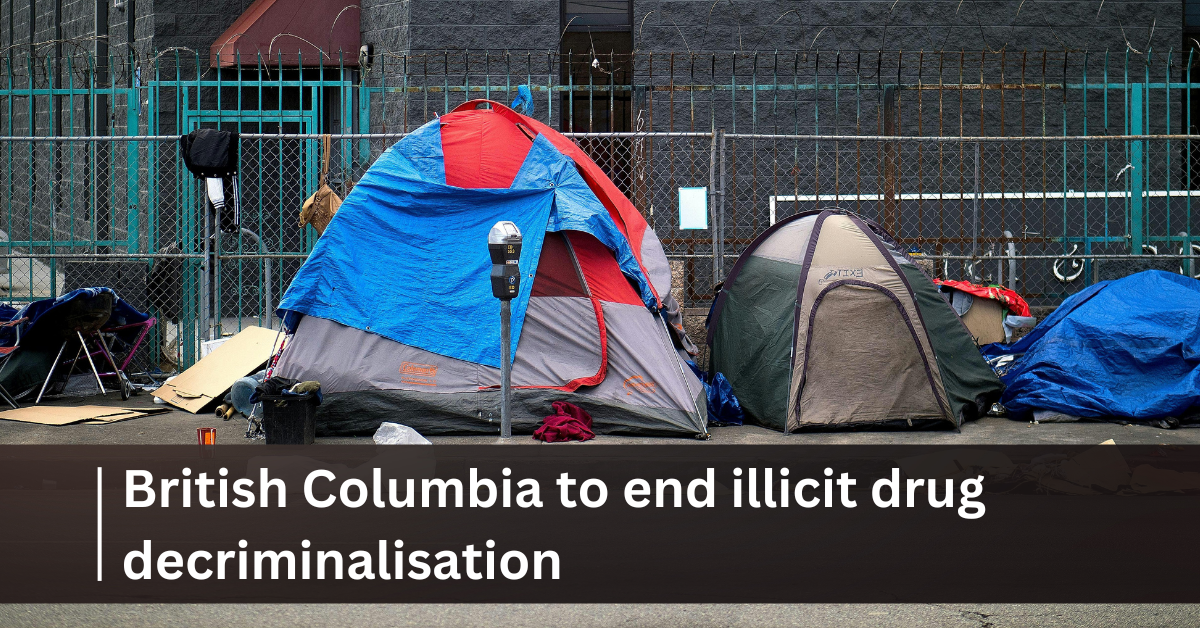
Earlier in January, B.C. Health Minister Josie Osborne announced that the province will not continue its drug decriminalization project. The three-year pilot project permitted individuals who possessed small amounts of illicit drugs expired on January 31. The project had been introduced in response to B.C.’s toxic drug crisis, while its advocates argued that decriminalisation reduces stigma, and treats drug use as a public health issue rather than a criminal one, encouraging individuals to seek support.
“This pilot was designed as a time-limited trial with ongoing monitoring built in so we could understand what was working, what wasn’t and where changes were needed,” Osborne said at a news conference. “However, the pilot hasn’t delivered the results that we hoped for,” she added, but did not elaborate on the outcomes. Furthermore, Osborne announced the expansion of Access Central, a phone line service that provides “a single point of entry to connect people to certified health providers, and comprehensive, people-centred care.”
During the pilot decriminalization project, the police in B.C. were instructed not to bring possession charges against individuals found with 2.5 grams of drugs in total for personal use. The initiative formed part of a federal pilot that granted B.C. an exemption from the Controlled Drugs and Substances Act (CDSA), allowing adults aged 18 and over to possess up to 2.5 grams of cocaine, methamphetamine, MDMA, and opioids, including heroin, fentanyl, and morphine.
The move to end the pilot project and decriminalization sparked criticism from both advocacy groups and some community and Indigenous leaders, who have argued the decision was heavily influenced by politics and public pressure, pointing out that the pilot showed promising results, such as reduced criminal charges for possession and increased access to services.
“I felt that really the overall announcement was, in a large way, a move away from evidence-informed policy and the reality and challenges that we have with the toxic drug crisis,” said Kora DeBeck, a professor in the School of Public Policy at Burnaby’s Simon Fraser University, in her interview with CBC News. “What I heard is we’re really moving towards policing, and I think we’re still not addressing what’s actually driving overdose deaths and public disorder, which is a very toxic, unregulated drug supply, and a lack of housing and a lack of alternatives for people to go.”
According to data released by Health Canada, there were approximately 6,200 deaths linked to drug overdose in Canada from July 2024 to June 2025. « Now as much as ever, all regions need to continue coordinated efforts, » reads the statement from the Council of Chief Medical Officers of Health.Prevention, education, treatment, recovery, and harm reduction are all critical pieces of a response that reduces mortality and connects people to care. As such, in September 2025, we met with the Canadian Association of Chiefs of Police to explore how public health and law enforcement can keep working together to better support communities across Canada.