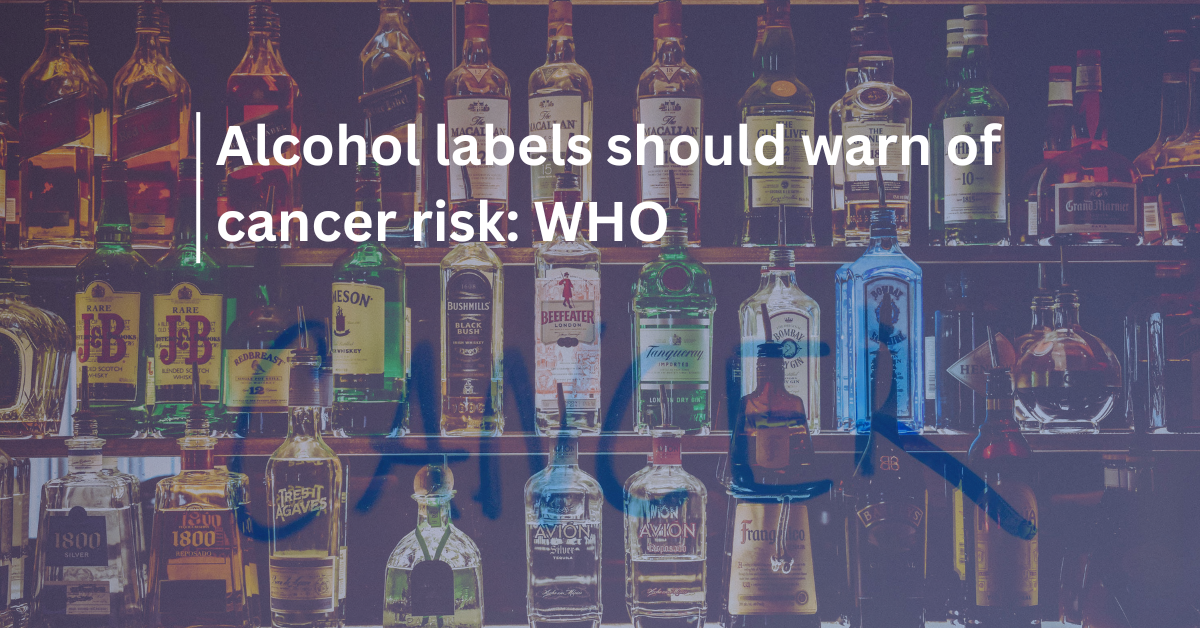
According to a new report released by the World Health Organization (WHO/Europe) titled “Alcohol health warning labels: a public health perspective for Europe,” there is an “urgent need” for mandatory, standardized labelling of alcoholic beverages. WHO data shows that alcohol consumption in the European Union is double compared to the world average, with one in 19 adults dying of alcohol-attributable causes, and with three out of 10 attributable deaths being due to cancer.
“Alcohol causes about 800 000 deaths annually in the WHO European Region, home to the heaviest drinkers in the world. Many countries of the Region have yet to make significant progress in implementing alcohol harm reduction policies. Despite cancer being the leading cause of alcohol-attributable deaths in the European Union (EU), public awareness of the link between alcohol and cancer remains alarmingly low,” states the press release by WHO.
Currently, alcohol health warning labels are used in only 3 out of 27 EU countries and only 13 out of the 53 WHO European Region Member States. “Clear and prominent health warning labels on alcohol, which include a specific cancer warning are a cornerstone of the right to health, because they empower individuals with vital information to make informed choices about the harm alcoholic products can cause. Providing this information does not take anything away from consumers, on the contrary, it arms them with knowledge, and knowledge is power,” says Dr. Hans Henri P. Kluge, WHO Regional Director for Europe, in the press release.
The report also identified several key findings and policy recommendations, including mandatory labelling of alcoholic products, prominent health warning labels, and cancer warnings. In addition, the report also found that adding QR codes for customers to access further health information online was insufficient, since the results of a pilot study showed that only 0.26% of shoppers scanned QR codes, demonstrating the importance of adding visible labels on the packaging.
“Alcohol health warning labels are an important part of alcohol policy, serving multiple functions,” explains Dr Gauden Galea, Strategic Adviser to the Regional Director, Special Initiative on Noncommunicable Diseases and Innovation at WHO/Europe. “They empower consumers to make informed decisions, raise awareness of alcohol-attributable health risks, can increase public support for alcohol policies, and reduce the overall appeal of alcohol products, ultimately influencing social norms around drinking. For younger generations especially, mandatory alcohol health warning labels could help shape healthier behaviours and attitudes towards alcohol.”
Moreover, in January 2025, the US Surgeon General’s Advisory on alcohol consumption and cancer risk reviewed the available evidence on alcohol and cancer, including underlying biological mechanisms. It concluded that alcohol use is “a leading preventable cause of cancer in the USA and globally, causing around 100 000 and 750 000 cancer cases annually, respectively.”
Earlier in February, a new study published in the medical journal The Lancet Public Health also urged policymakers to urgently add labels warning about alcohol-attributable cancer risks to alcohol products. “Alcohol has been shown to be a leading cause of cancer with no lower threshold, causing a substantial number of cases even at low levels of alcohol consumption,” states the article’s conclusion. “Given that knowledge about the association between alcohol and cancer has been consistently low in the general population, warning labels seem to be a suitable way to inform consumers, and allow them to make informed decisions about the cancer risks associated with their alcohol consumption.”