According to the results of a new study, intoxication by alcohol is linked to decreased global connectivity in the resting brain. The study, carried out by researchers from the University of Minnesota and University of Florida, and published in the peer-reviewed scientific journal Drug and Alcohol Dependence, involved 107 healthy adults between the ages of 21 and 45 years.
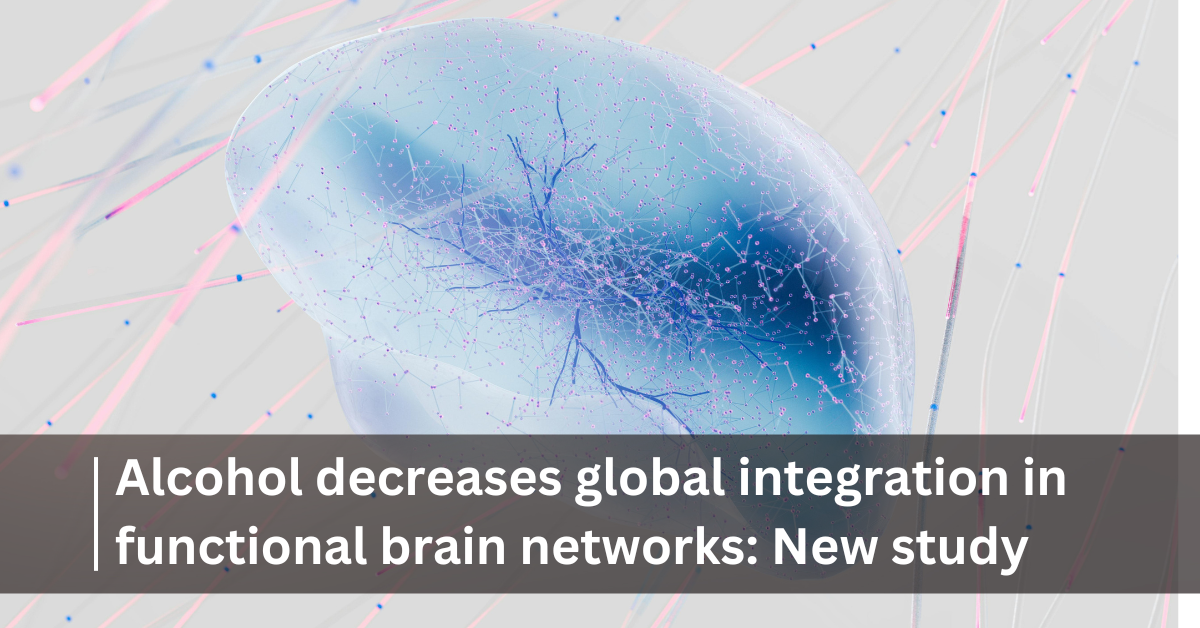
The study used a double-blind, placebo-controlled design in which social drinkers completed two sessions, consuming either alcohol (target BAC 0.08 g/dL) or a placebo beverage. About 30 minutes after drinking, participants underwent resting-state MRI scans, and researchers analyzed functional connectivity across 106 brain regions using graph theory metrics such as global and local efficiency. Alcohol consumption was associated with reduced global efficiency and increased local clustering, indicating a shift toward a more segmented and less integrated brain network organization.
It was found that in terms of brain function, alcohol consumption reduced global efficiency, especially in visual brain regions, while increasing local connectivity and clustering across the network. This shift suggests the brain relied more on tightly connected local regions and less on long-distance integration. The extent of these network changes predicted how intoxicated participants reported feeling.
The findings suggest that differences in how brain networks reorganize after drinking may explain why people feel varying levels of intoxication despite having similar blood alcohol concentrations. The study also identified reduced efficiency in visual brain regions, providing a neural explanation for common effects such as blurred vision and impaired tracking. However, the results are limited by incomplete cerebellar imaging and a sample restricted to young, healthy adults, meaning the effects may differ in older individuals or those with substance use histories.
The authors noted that since the scans were conducted at rest, it remains unclear whether similar network changes occur or intensify during active cognitive tasks such as driving. The findings indicate that acute alcohol intake does not merely suppress brain activity but shifts the brain toward a more segregated and locally organized network state. “Taken together, results provide new evidence that alcohol intake produces changes in the overall topography of the cerebral network that at least partially underlie individual differences in subjective alcohol response,” concluded the authors.