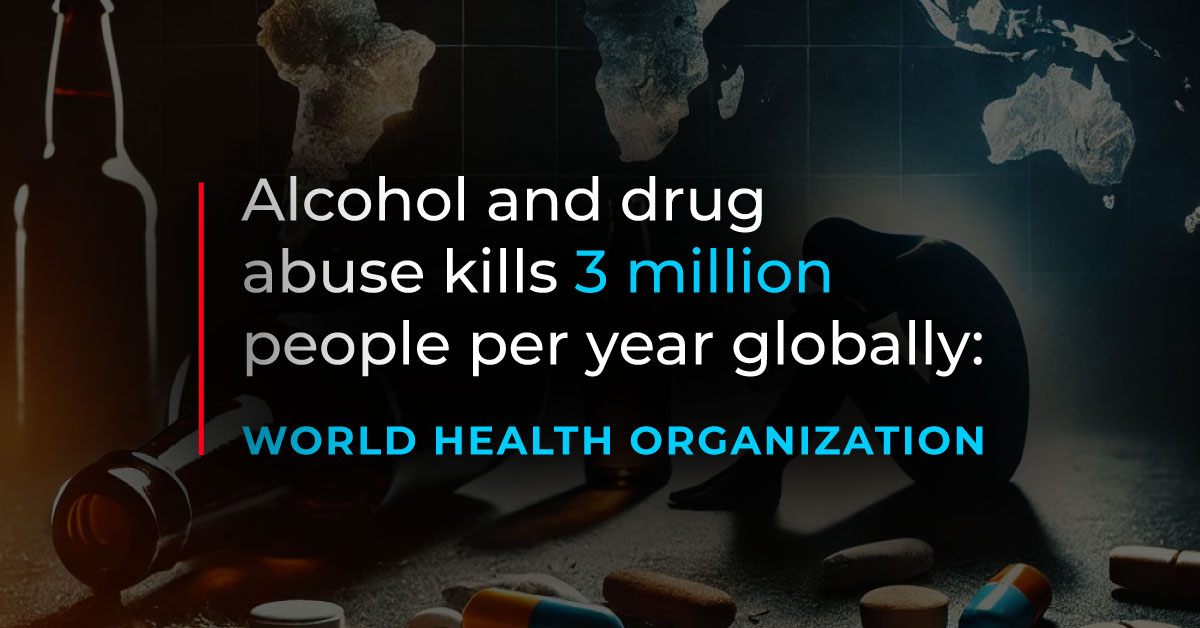
According to the new report published by the World Health Organization (WHO) in June, 2.6 million deaths per year can be attributable to alcohol consumption globally, accounting for 4.7% of all deaths, with 0.6 million deaths attributed to psychoactive drug use. What’s more, the results of the report also demonstrate that men account for the significant majority of these deaths, with 2 million alcohol-related deaths and 0.4 million drug-related deaths reported worldwide.
The report, titled “Global status report on alcohol and health and treatment of substance use disorders,” examined data from 2019. Its findings also demonstrate that despite some reduction in alcohol-related deaths since 2010, the overall number of alcohol-related deaths remains unacceptably high and was 2.6 million in 2019, with the highest number of deaths recorded in the European Region and the African region. What’s more, the report’s results highlighted that 13% of alcohol-attributable deaths in 2019 occurred among young people aged 20–39 years.
“Substance use severely harms individual health, increasing the risk of chronic diseases, mental health conditions, and tragically resulting in millions of preventable deaths every year. It places a heavy burden on families and communities, increasing exposure to accidents, injuries, and violence,” said Dr Tedros Adhanom Ghebreyesus, WHO Director-General, in a press release. “To build a healthier, more equitable society, we must urgently commit to bold actions that reduce the negative health and social consequences of alcohol consumption and make treatment for substance use disorders accessible and affordable.”
Furthermore, the report highlighted the treatment gap and low treatment coverage for individuals with substance use disorders. According to its findings, the proportion of people in contact with substance use treatment services varied from less than 1% to no more than 35% in 2019 in countries that provided the data.
The report also highlighted stigma, discrimination, and misconceptions about the efficacy of treatment as contributing factors to gaps in treatment provision, in addition to low prioritization of substance use disorders » by health and development agencies.
Moreover, the report also recommends several actions to reduce the global burden due to alcohol and substance use, including increasing awareness through a coordinated global advocacy campaign, scaling up training of health professionals, and improving prevention and treatment capacities of health and social care systems.