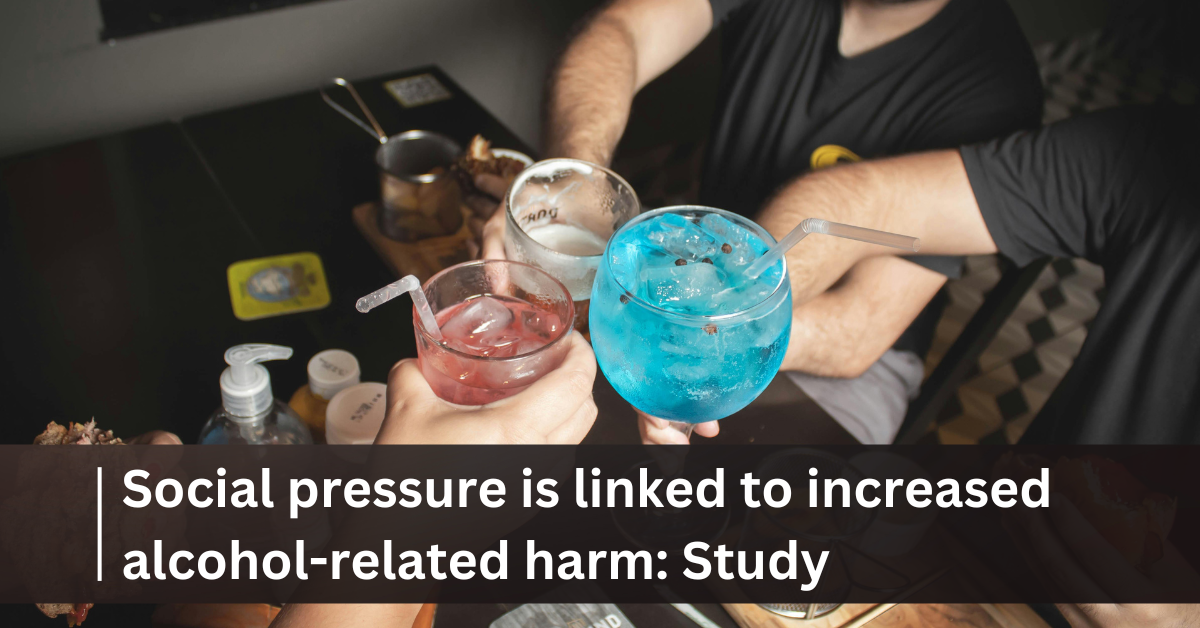
According to the results of a new study, adults who consume alcohol due to external pressures are significantly more likely to consume higher amounts of alcohol, and also experience more negative consequences when compared to adults who drink for pleasure. The study examined self-reported data from 630 adult participants used by researchers to identify four specific profiles of adult drinkers while evaluating the psychological motivations behind alcohol consumption. Researchers used the framework of Self-Determination Theory, which classifies motives based on one’s level of autonomy and perceived locus of control.
The results of the study showed that ‘externally controlled drinkers’ are driven largely by social pressure and low autonomy, and ‘flexible drinkers’ are motivated by a mix of factors. Moreover, ‘pleasure drinkers’ consume alcohol primarily for intrinsic enjoyment, and ‘aimless drinkers’ have generally low motivation and unclear reasons for drinking alcohol. Among these, externally controlled drinkers showed the lowest motivational quality, while pleasure drinkers showed higher autonomy.
Moreover, the results demonstrated that externally controlled drinkers exhibited the highest risk profile, with greater alcohol consumption and more negative consequences than other groups. In contrast, pleasure drinkers, characterized by intrinsic motivation, reported more positive drinking experiences and no increase in negative outcomes compared with other profiles. It was also found that men were significantly more likely than women to be classified as aimless drinkers, suggesting weaker or less defined motivations for alcohol use.
The study was funded by the National Institute on Drug Abuse (NIDA). “Older individuals were more likely to drink due to intrinsic enjoyment, which may reflect a shift toward greater autonomy over alcohol consumption with increasing age,” concluded the authors. “Drinking primarily for enjoyment also facilitated more positive drinking outcomes. Future research should investigate whether motivational profiles of behavioural regulations for drinking predict long-term trajectories of alcohol consumption and alcohol-related risks.”