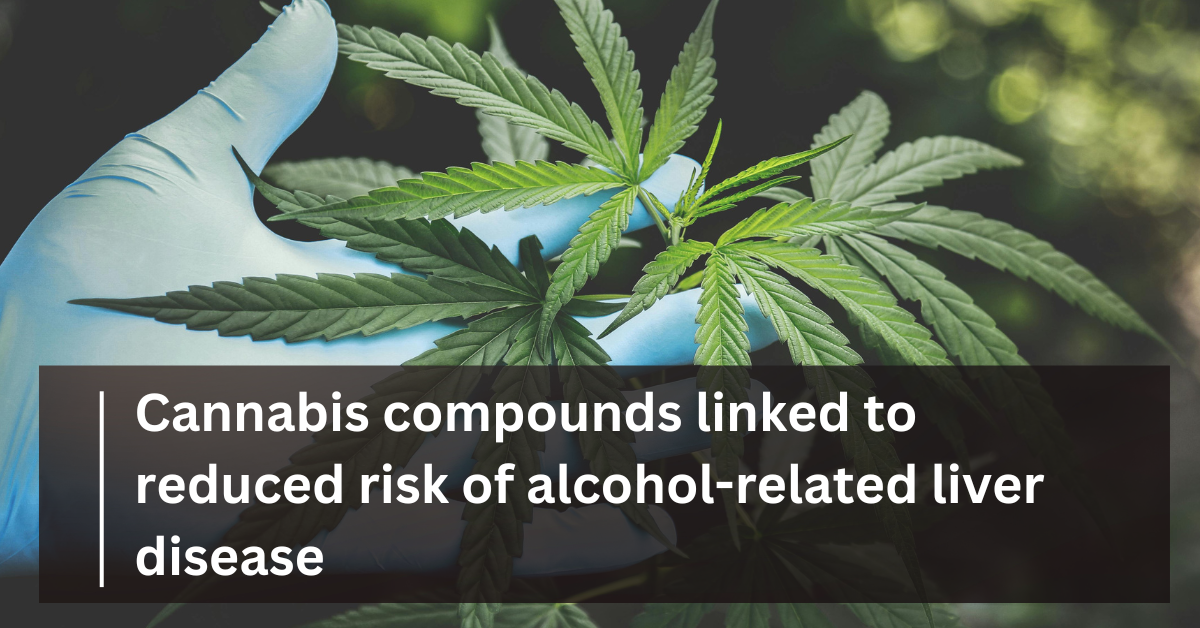
According to the results of a new study, individuals with alcohol use disorder (AUD) who also used cannabis were significantly less likely to develop alcohol-associated liver disease than those who did not use products derived from the plant, including hemp. The research was carried out by scientists from Virginia Commonwealth University (VCU) and VCU Health, and used medical data collected from over 66,000 U.S. adults. Overall, the study results suggest that certain compounds contained in cannabis, and specifically a compound known as cannabidiol (CBD), may play a protective role in the liver.
As part of the study, adults diagnosed with alcohol use disorder from 2010-2022 were grouped by cannabis use (dependent, non-dependent, or none), and tracked for three years in order to determine whether cannabis use was associated with differences in terms of liver disease, liver failure, or mortality. It was found that individuals with cannabis use disorder had a significantly lower risk of developing alcohol-related liver disease, severe liver complications, and death compared to participants who did not use cannabis. Moreover, even occasional cannabis users showed a modest reduction in liver disease risk.
In addition, previous research has already shown that CBD can reduce liver inflammation, oxidative stress and fat buildup in animal models, suggesting cannabinoids may play a role in protecting liver health. “CBD appears to calm inflammation and reduce some of the chemical signals that drive liver scarring,” said Dr. Juan Pablo Arab, director of alcohol sciences for VCU’s Stravitz-Sanyal Institute for Liver Disease and Metabolic Health and the study’s senior author in a press release. “Our findings show that real-world cannabis use may have some of these same protective effects in people who drink heavily.”
CBD works through the body’s endocannabinoid system, which helps regulate pain, metabolism, immunity, and liver responses. However, researchers have also noted that these findings do not mean people should use cannabis for liver protection, since cannabis still carries health risks, particularly for young individuals and those with mental health vulnerabilities. “This study shows an association, not cause and effect,” said Dr. Butros Fakhoury, VCU Health hospitalist and study author. “Cannabis may have protective properties, but we still don’t know exactly how much, what form or what dose might be safe or effective. The goal isn’t to promote cannabis use, but to understand which parts of it might hold promise as medicine.”
In addition, Dr. Fakhoury added that although smoking tobacco appears to lower ulcerative colitis risk, this doesn’t justify recommending harmful behaviours. Instead, isolated compounds such as CBD could be studied safely in controlled clinical settings. The researchers now aim to test specific cannabinoids, particularly non-psychoactive, FDA-approved CBD, in clinical trials to evaluate their potential benefits for individuals with liver disease.