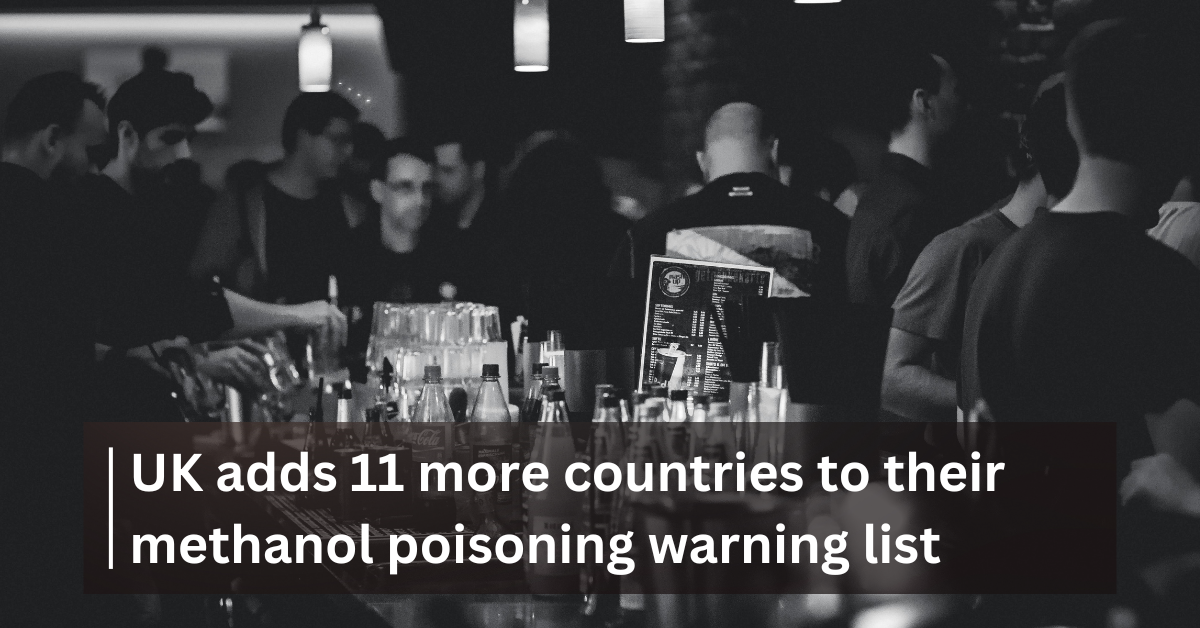
Earlier in November, the UK Foreign Office added a further 11 countries to its list warning of the risks of methanol poisoning from tainted alcoholic drinks. The guidance notes that, due to a global rise in methanol poisoning cases, a number of new countries were added to the original advisory list. Specifically, the initial list published in October included Ecuador, Japan, Kenya, Mexico, Nigeria, Peru, Russia, and Uganda, and most recently, Bangladesh, India, Iran, Jordan, Libya, Malawi, Malaysia, Morocco, Nepal, Papua New Guinea, and Rwanda. Moreover, travellers are warned that even small amounts of consumed methanol can cause blindness or death within 12 to 48 hours.
A recent analysis published by BBC News examined methanol poisoning and recent deaths among tourists in Laos. Currently, travellers are being cautioned after six tourists died in Laos in 2024 from suspected methanol poisoning. Methanol is a type of alcohol used industrially in products such as antifreeze and windshield cleaner and is highly toxic and not safe to drink. Even small amounts can cause serious harm, and just a few contaminated shots of illicit alcohol can be fatal.
Why is methanol dangerous?
Methanol initially tastes and looks like regular alcohol (ethanol), and the individual consuming it may not notice anything wrong until hours later, when the body breaks it down into toxic compounds that damage the brain, nervous system, and eyes, potentially causing blindness, coma, or death. The main toxin produced due to the breakdown of methanol, formate, disrupts cellular energy production, making the brain and visual system especially vulnerable. The severity of the toxic effects depends on the dose consumed and body weight, and because early symptoms are vague, delayed recognition can lead to high toxicity and death.
How to avoid methanol poisoning?
Most methanol poisonings occur in Asia; however, some cases also occur in Africa and Latin America, so travellers are urged to be cautious about what they drink and stick to licensed venues. While small amounts of methanol can naturally form during ethanol brewing, unsafe levels often come from illegally made or adulterated alcohol, where producers may add cheap industrial methanol for profit. Travellers should avoid homemade or suspicious drinks and follow guidance to refuse anything with odd labels, smells, or tastes.
How is methanol poisoning treated?
Methanol poisoning is a medical emergency that requires hospitalization, and treatments can include medications, dialysis, and in some cases ethanol to block methanol’s toxic metabolism. Specifically, ethanol slows methanol breakdown, giving the body time to eliminate it through breathing and excretion. Quick medical treatment is critical, as even small amounts of ingested methanol can be deadly, while timely intervention can allow survival even after larger methanol exposures.
Which drinks could contain methanol?
Drinks at risk of methanol contamination include local homemade spirits, cocktails made with cheap alcohol, and counterfeit branded bottles. Travellers are advised to purchase liquor from licensed shops and bars, avoid homemade alcohol, and check bottles for intact seals and proper labelling. Furthermore, anyone showing signs of methanol poisoning should seek urgent medical care.