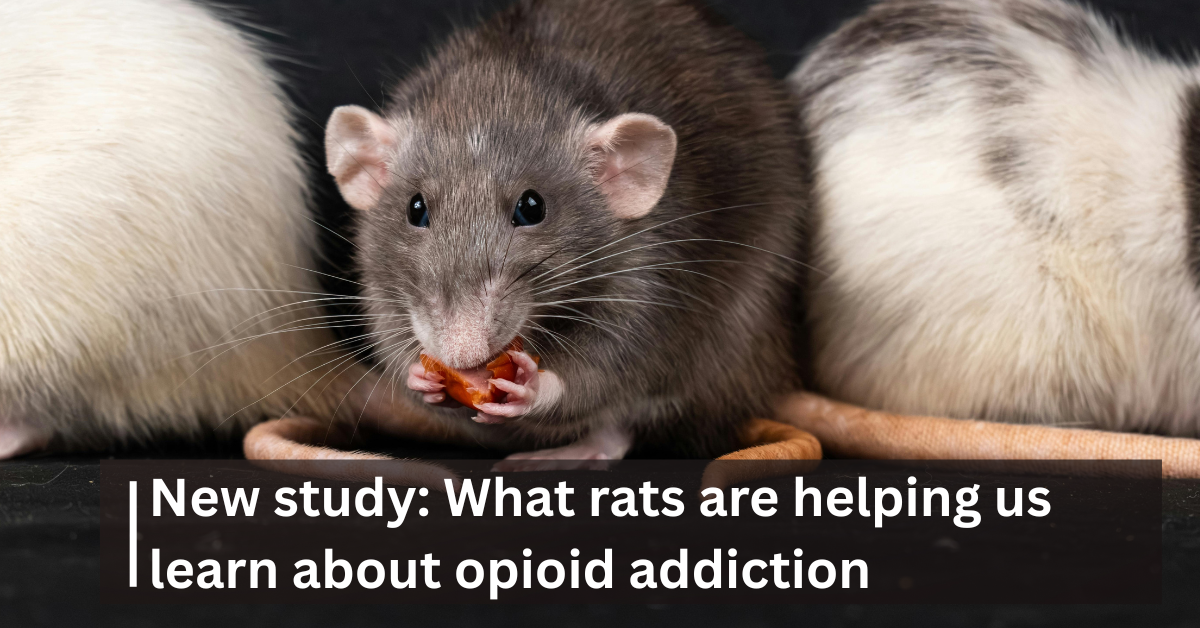
A new study carried out by researchers at the University of Colorado Boulder examined the genetic basis of opioid use disorder (OUD) in rats. The study, published in the journal Frontiers in Psychiatry, used over 260 inbred rats from 15 strains that were allowed to self-administer oxycodone. Due to inbreeding, the rats were nearly genetically identical, and researchers tracked variables such as total oxycodone intake, and therefore, the researchers were able to determine the extent to which these traits were influenced by genetics versus environment.
The results of the study revealed that opioid-related behaviours exhibited by the animals were moderately to strongly heritable, with heritability scores ranging from 0.25 to 0.54. “About half of that variability [in total opioid intake] is due to genetic background,” said the study’s first author Eamonn Duffy in his interview with the Colorado Arts and Sciences Magazine. “That’s really strong heritability.” However, because these data come from rats, the heritability of these behavioural phenotypes may be different in humans. “We’re not going to capture everything about OUD in a rat model, but we can capture specific aspects and use that to put together a bigger picture.”
Duffy added, “OUD is hard to study in humans because there aren’t as many people using opioids as alcohol or nicotine, and of that smaller population, we also have people using several types of drugs, so it’s harder to calculate these heritability values, but I believe ours do fall within the range for opioid dependence and opioid use disorder in humans.”
Moreover, sex differences and strain-specific genetic factors significantly influenced drug-seeking behaviours, suggesting a complex interaction between genes and biological sex. While the study did not pinpoint specific genes, it supports ongoing research into single nucleotide polymorphisms (SNPs) such as those in the Oprm1 gene, which are already associated with opioid misuse in humans.
“There’ve been a number of studies in humans that have found that these SNPs, or single nucleotide polymorphisms, are associated with your risk of developing conditions like opioid dependence or opioid use disorder,” Duffy said. “There’s another group that is performing some genetic mapping in outbred rats, and that’s going to be the next stage of this project for us as well.”