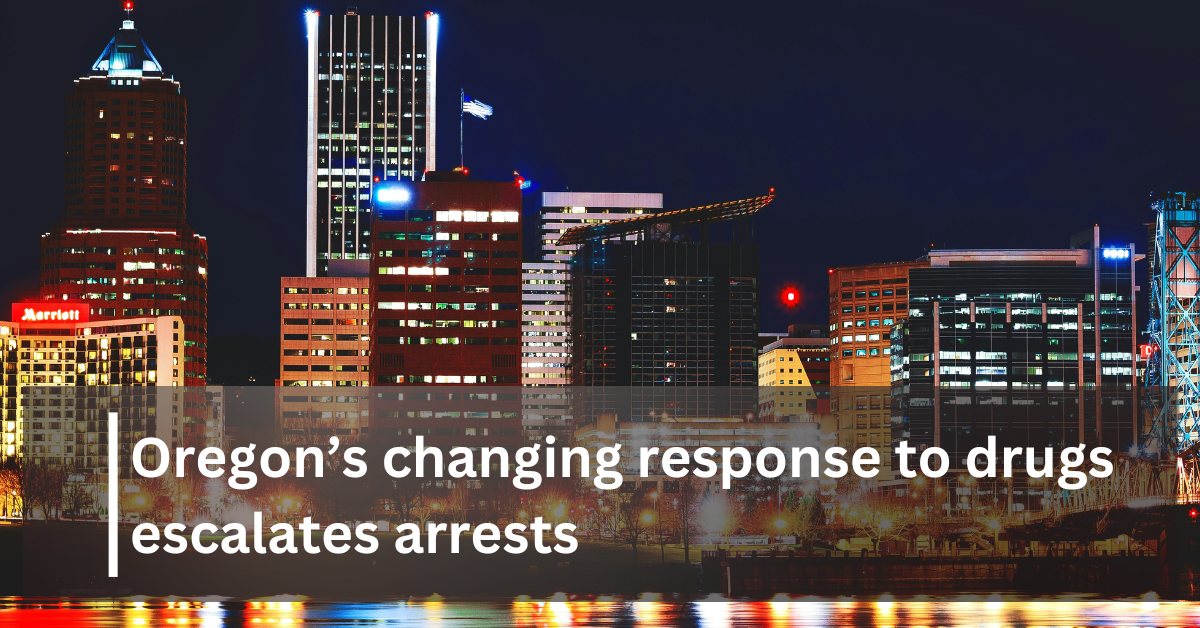
A recent analysis published by The Guardian and authored by Sam Levin examined the consequences of Oregon’s decision to reverse its drug decriminalization law, Measure 110, leading to a spike in arrests and raising concerns over the impact on vulnerable populations.
In April 2024, Oregon Governor Tina Kotek signed House Bill 4002, which reclassified the possession of small amounts of hard drugs from a civil violation back to a misdemeanor offense, punishable by up to six months in jail. As a result, this legislative action effectively ended the decriminalization initiated by Measure 110 in 2020. The new law took effect on September 2024, reinstating criminal penalties for drug possession while also establishing “deflection” programs aimed at diverting individuals into treatment rather than incarceration. Moreover, the resulting crackdown has led to thousands of arrests statewide in recent months.
The changes to legislation were made due to the intense criticism faced by the decriminalization law, since it was frequently blamed for increasing crime rates, a surge in fentanyl-related overdoses, and the growing visibility of homelessness and public drug use—despite research showing these issues stem from a more complex set of factors.
Supporters of the legislation changes feel renewed enforcement is restoring order on the streets, while helping people with addiction and maintaining funding for services. According to a statement released by Governor Kotek, the new legislation encourages counties to set up “deflection” programs, allowing individuals charged with possession to forgo the charges if they opt for treatment of substance use disorder.
The sudden increase in arrests has also strained Oregon’s public defender system. While the new law includes “deflection” programs intended to divert some offenders into drug treatment instead of jail, their implementation has been inconsistent, and many individuals seeking treatment remain on waiting lists. Critics of the new legislation also argue that recriminalization exacerbates challenges for marginalized populations, with issues like homelessness and public intoxication persisting despite the policy change.
Furthermore, the analysis carried out by the Guardian revealed that most people targeted by the new law end up in the criminal justice system, with most of the jailed defendants not having access to legal defence. “It’s a violation of their constitutional rights,” said Clint Oborn, the executive director of the Southern Oregon Public Defender Inc (SOPD), in his interview with The Guardian. “Some people plead guilty and never get an attorney, or if they want one, they’re put on a waiting list.” What’s more, most clients with drug possession cases who don’t show up to court hearings are unhoused and eventually become imprisoned on warrants.
“Once they get out of jail, they often keep using, their probation gets revoked and they return to jail,” said Colin Murphy, a public defender. “It’s the same cycle I saw before we decriminalized. If this approach to getting rid of drugs in our community actually worked, it should have worked by now, because we’ve been doing this since the 1970s.”