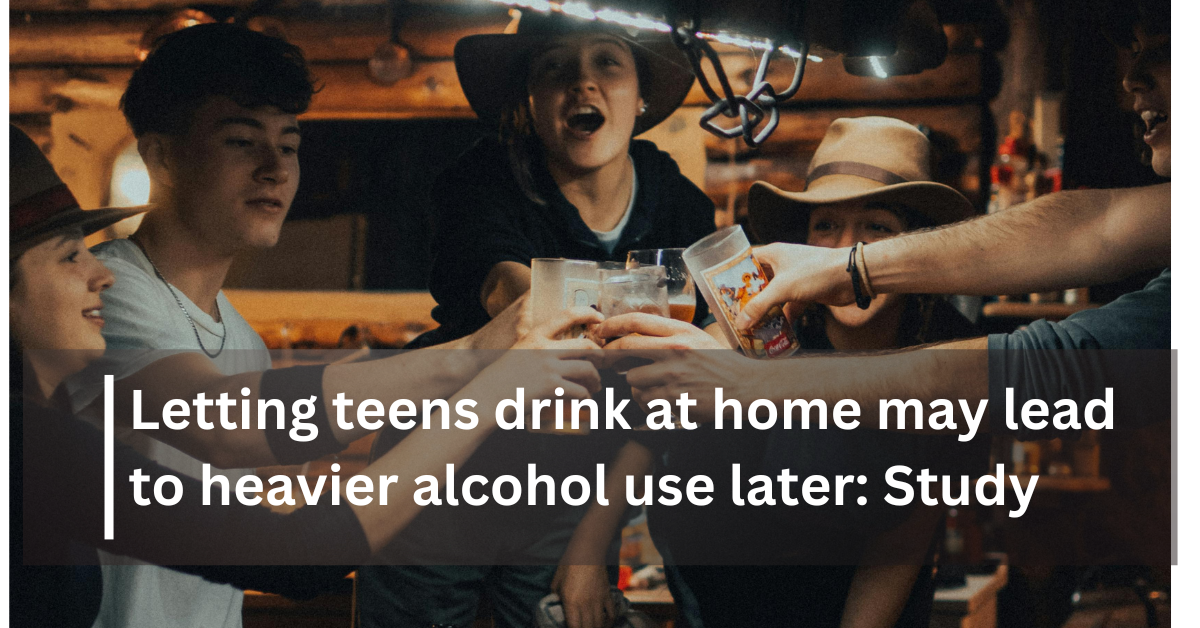
According to the results of a new study, parents allowing adolescents to consume alcoholic drinks — or even just letting them taste alcohol — can lead to heavier drinking and alcohol-related issues later in life. The study, published in the journal Addictive Behaviors, also determined that the exact age of adolescents when their parents allowed them to drink alcohol did not matter—suggesting a “uniform risk effect” of parental permission to drink. “Even sipping/tasting in early adolescence … is predictive of heavy drinking and alcohol-related harms in young adulthood,” the study states.
In her interview with CBS News, clinical psychologist Lisa Damour said there are many families that allow their children to try alcohol at a young age. “But on balance, what the data tell us is that this is not necessarily the right choice. And what it can do is it can normalize the idea of underage drinking, which is not something we want to do,” Damour said. “It’s not the harm reduction approach we thought it is,” she said.
She also noted that children learn about drinking alcohol from watching their parents at home, so parents should “model a healthy relationship with alcohol.” “I think it’s also important to recognize: kids make mistakes,” Damour added. “I think it’s important for us to say to kids, ‘Look, we don’t want you drinking. It is not safe. It’s not good for your developing brain. And, if you need us, if you’re in a risky situation, we’re your first call. We will never make you sorry that you reached out for help.”
The study’s authors also highlighted the fact that despite many parents believing that allowing supervised alcohol consumption for their children is an effective harm reduction strategy, research findings have consistently demonstrated that parental provision of alcohol and permission to drink is significantly related to increases in future alcohol-related harms.
“Public health messaging to parents should seek to correct perceptions of supervised alcohol use as a harm reduction strategy and emphasize the harm of parental permission to use alcohol, regardless of age,” reads the study’s conclusion.