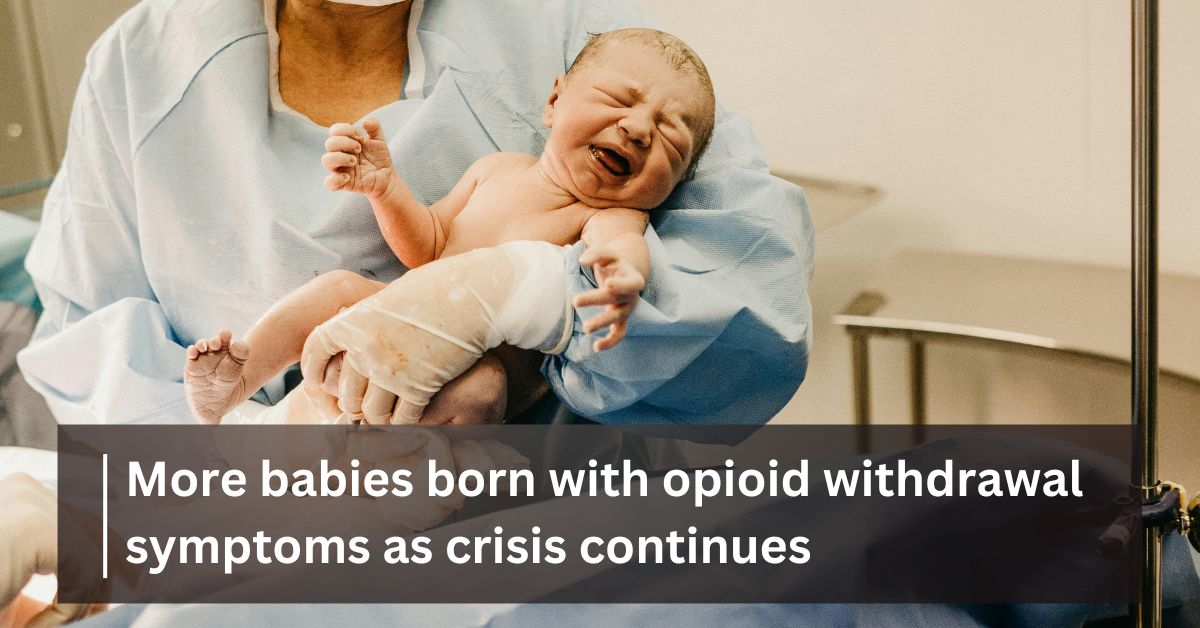
A recent article published by CBC News examined the growing incidence of babies born with opioid addiction withdrawal symptoms in recent years. According to Dr. Laura Lyons, an addictions specialist and physician at the London Health Sciences Centre who also treats patients at the London InterCommunity Health Centre, the number of babies born with such symptoms has more than doubled in the last 20 years in London.
“We’re seeing much higher incidents of overdose and toxicity than we did back in 2005. The severity of the substances that are being used, the lethality of those substances and the volume of those substances have changed dramatically,” Dr. Lyons said in her interview with CBC News. “We’ve also seen the complexity of the social issues grow. Infectious disease, homelessness, food scarcity — we’re at a major crisis point.”
Moreover, Dr. Lyons added that in London there are around 30 women struggling with addictions who are pregnant at any point in time. Withdrawal symptoms in babies born with opioid addiction can include tremors, high-pitched crying, and difficulties sleeping and eating. She also noted that doses of morphine that can be administered to alleviate the babies’ symptoms are not as high as they used to be, since medical staff have become better equipped to care for them in the last 20 years or so.
“We monitor the babies under the eat, sleep, console protocol. We monitor them to make sure they can suck and swallow to get the nourishment they need, that they can sleep for a period of time, even an hour, and whether they can be consoled with skin-to-skin and in quiet environments,” she said.
However, Dr. Lyons also noted that there are still important gaps in care to address the needs of pregnant women with opioid addiction and their newborn babies. Specifically, there are no programs that enable moms and their babies to stay together after the hospital while transitioning into recovery in a safe, supportive environment. Meanwhile, such programs already exist in British Columbia and Alberta, and according to her, they could significantly benefit Ontario families as well
“London really needs that supportive service for those mothers, so that child and parent bond can continue to grow,” Dr. Lyons said. “In Vancouver, there’s a postpartum unit actually in the hospital, staffed by nurses 24-hours a day, and they have the supportive services so that babies and moms are there in the postpartum period, getting the medications they need but not in the neonatal intensive care unit but with their moms.”
She also highlighted the lack of affordable housing in London, which adds more challenges for postpartum women: “We won’t send them back to the street, so we’ve had prolonged admissions for women who lack housing while social workers are pulling out all the stops to find beds for them.”