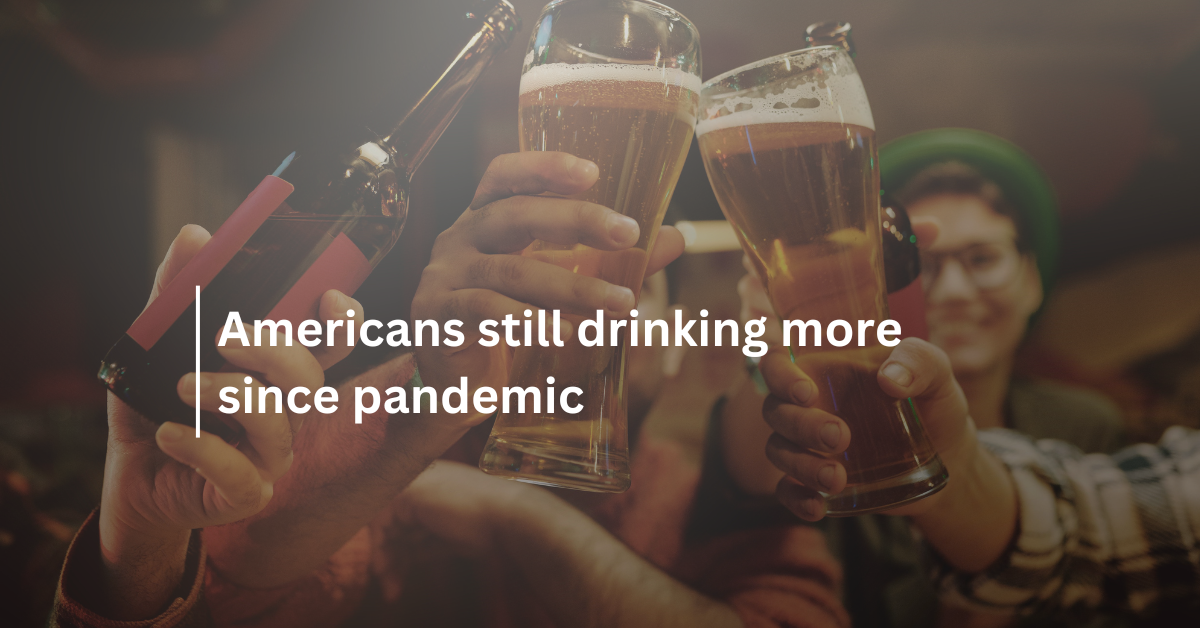
According to the results of a new study published earlier in November, the increased alcohol use recorded during the COVID-19 pandemic persisted for several years, until 2022. The study, published in the peer-reviewed journal Annals of Internal Medicine, showed that heavy alcohol use among U.S. residents increased by 20% from 2018 until 2020, and any alcohol use increased by 4%. Moreover, the study’s results showed that in 2022, these increases were sustained.
As part of the study, the authors used data from the National Health Interview Survey, one of the largest and most comprehensive health surveys in the U.S. The survey data contained alcohol use information in addition to demographic and socioeconomic data for over 24,000 adults aged 18 years and older. Although the U.S. Department of Health and Human Services announced the official end of the pandemic as May 2023, the study defined the year 2022 as post-pandemic. Moreover, the study defined heavy drinking as consuming four or more drinks a day for women at any one setting or eight or more in a week. For men, it was defined as having five or more drinks in a day or 15 or more in a week.
“These numbers reflect an alarming public health issue that could result in severe health consequences for far too many people,” said Dr. Brian P. Lee, a hepatologist and liver transplant specialist at Keck Medicine of USC and principal investigator of the study. “Our results suggest men and women under 50 are at special risk.”
While the study did not address the reasons behind the increase in alcohol consumption between 2018 and 2022, its authors theorized that pandemic stress may have played an important role. “Potential causes of this sustained increase include normalization of and adaptation to increased drinking due to stress from the pandemic and disrupted access to medical services,” the study reads.”Originally, the increase in drinking was due to social isolation, disruption and daily activity and general lack of accessibility to healthcare and mental healthcare during a really stressful time,” said Dr. Divya Ayyala, one of the study’s authors, in her interview with CBS News. “However, we’re seeing that these trends are sustained, meaning that either people don’t know where to get help (or) they don’t know that they need help.”